In noun form, we’re looking at a general name for a flower – particularly one that is created specifically for its beauty – like a rose, for instance.
Yes, yes, I know you know what the other meaning is – the verb form whereby it shows the action of growth; an opening of the bulb or the general means of being “in flowering”. Yes, yes, friends, but what about the other meaning?
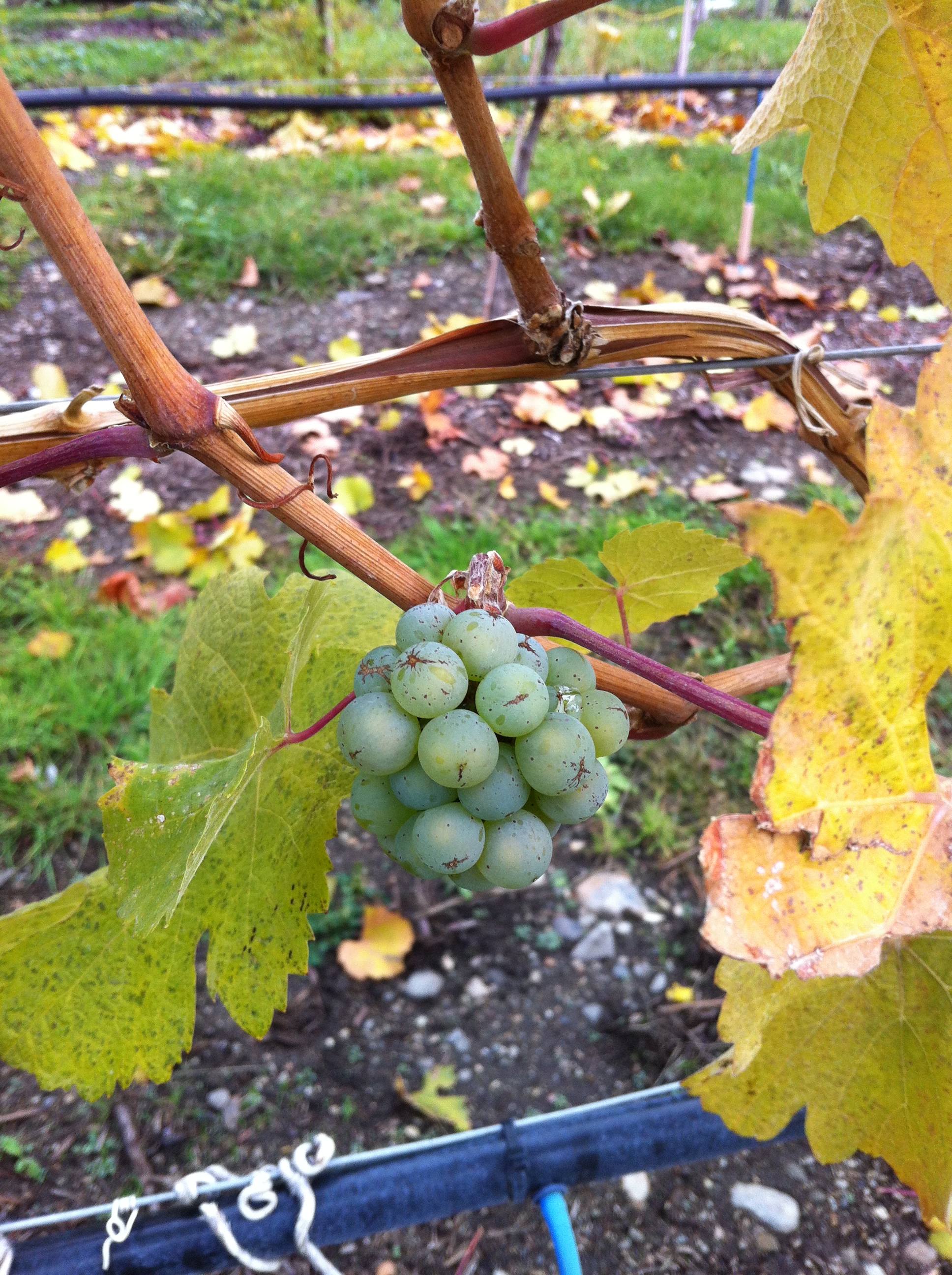
A waxy or powdery whitish to bluish coating on the surface of certain plant parts, as on cabbage leaves or on a plum or grape.
A similar coating, as on newly minted coins.
Grayish blotches or streaks on the surface of chocolate produced by the formation of cocoa butter crystals.
Well, there you go. I didn’t know about (b) or (c), so I learned something in this process of trying to demystify something for you! Lovely! Let’s take a closer look at (a).
You’re in the grocery store, walking around the fruits & vegetables section. From afar, you see piles of green and red clusters sitting in bags that are half-folded open or zip-locked shut. Apples mean nothing at this point, and oranges can wait. You carefully maneuver your crooked-wheel shopping cart over to the grape stand…and it is grape! >Groan< What?
You start eyeing all the bags of fruit, picking a few up to check and see how many grape berries have shriveled or are moldy, and then you spot that “white stuff”.
There it is, folks. The white stuff. I used to think, before I became educated, that it was a pesticide residue or really weird dirt…or…even dust!
Bloom on grapes in vineyard. Photo Copyright 2012 Valerie Stride
Bloom, however, is a very natural substance; for you chemists out there, it is also known as oleanolic acid. Oleanolic acid is “widely distributed in food and medicinal plants” and “exhibits antitumor and antiviral properties”. For a reference on those quotes, in addition to a lovely little picture of the chemical itself, click here onto the wikipedia page. It’s duty in relation to grapes is to protect those precious grape berries from decomposition and helps prevent a those plump, beautiful berries from wrinkling too soon.
So, the next time you’re in the vineyard (or grocery store for that matter) and you’re strolling past those lovely grapes, you can give people the low-down on what that white powdery stuff is on those berries!
Cheers!
…You’re about to open that bottle of wine that you’ve been saving for a long time now. You carefully push the sharply-tipped screw into what you believe to be the centre of the cork. You twist. You twist some more. You twist again. You then proceed to push the arms of the corkscrew down, slowly lifting that cork. Pop.
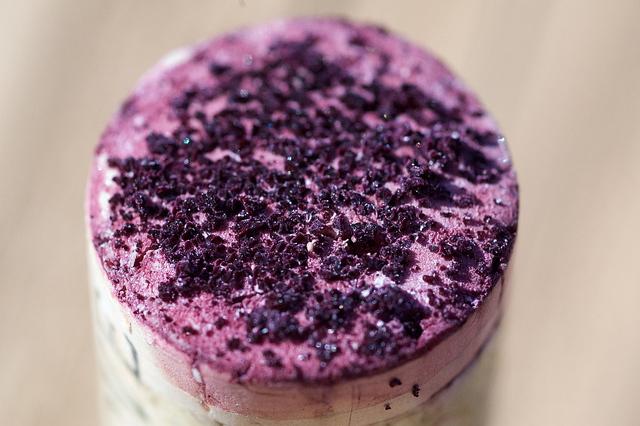
Your next move: look at and smell the cork. But wait! What are those shiny crystal-like things attached to the bottom of your cork? They look like diamonds!
Too bad they’re not worth the same amount as diamonds, but they are diamonds – wine diamonds!
So, what exactly is a “wine diamond” you ask?
Don’t fear, dear readers. These are natural occurrences, and are more common than rare. Wine diamonds can be seen more frequently on the corks of white wines of the world, but one can stumble across them in reds, too.
According to the Wine Doctor, Mr. Edward Finstein, wine diamonds are:
…potassium bitartrate crystals that result if a wine is not cold-stabilized. Believe it or not, they are actually a good sign in a wine, implying reasonable quality. Their appearance means the wine hasn’t been pasteurized (heated) and then quickly chilled before bottling. […] Although unsightly, they are totally harmless with no colour or taste.
From Ask the Wine Doctor, 2002, pp. 232.
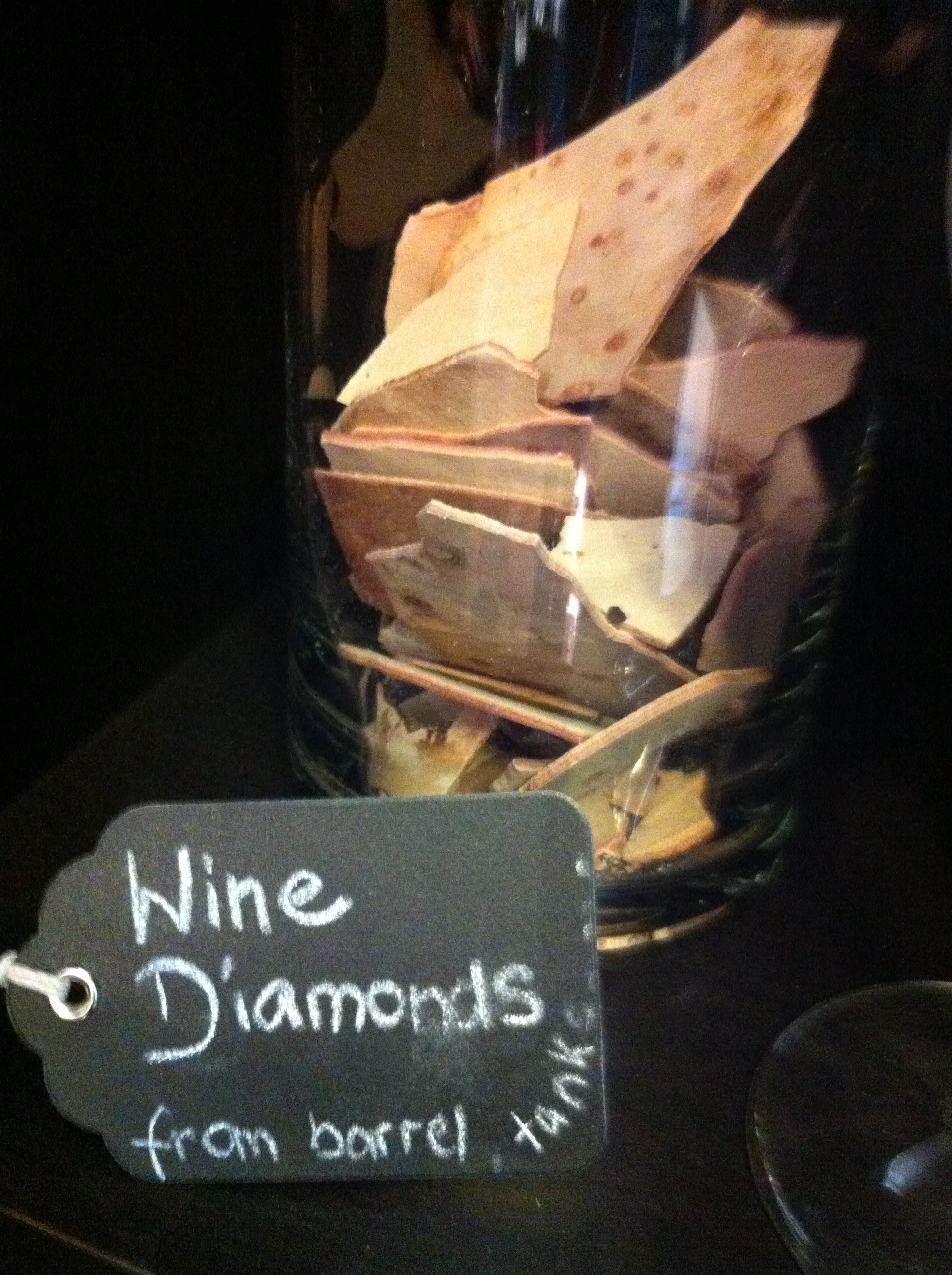
I was once taking a tour of the Okanagan with my colleague Brenda Latta, and we stopped into 8th Generation winery. Stefanie Schales (nee Frank), founder of 8th Generation Vineyards in 2007, took Brenda and myself on a quaint tour of the vineyard and winery. In the tasting room, she showed us a vase filled with wine diamonds, that had been collected from their tanks. Take a look!
Photo by Valerie Stride
So, the next time you uncork that bottle of wine and you see those tiny little crystals staring you in the face, remember that it’s not a fault. It is probably a sign of good things to come.
I’m a nerd. I’m a wine nerd for that matter, and I’m constantly birthing new ideas and entertaining possible queries on how I can engage my readers with the beautiful and intriguing wonderful world of wine!
So I thought…
I’m going to write about the etymology of grape varietals and their names.
I soon realized that this was an undertaking. There are countless resources that explain about varietals, where they are cultivated, and what they smell & taste like in wine form. It was interesting to see how little there actually is on the origins and historical development of grapes! C’mon! Give a wine nerd a break! Here is what *cough* little I found. Onwards!
CHARDONNAY
The name “Chardonnay” is said to have come from the Latin-based word Cardonnacum. Technically speaking, Chardonnay is a place in eastern France – specifically a commune – in the Saône-et-Loire area of Burgundy. This is where the semantic origin of the Chardonnay grape comes from.
There is not much known about the origin of the word “Riesling”. It is a German-based word (Rüssling), and it is said to have been discovered in the Rhine area of Germany. Unfortunately, the origin of the name is uncertain. There are some preserved notations dating from the mid 1400s which use the translated term in reference to vines.
The term “cabernet” corresponds to a family of grapes. It’s origin is purely French, and Cabernet Sauvignon has been used in English since the mid 1800s. Cabernet essentially is in the same boat as Riesling; its actual etymology is obsure. However, the term is of Medoc dialect, which makes sense considering the Medoc is part of Bordeaux and Cabernet is highly grown in the Medoc. One interesting website (www.tellmewinetv.com) mentioned that “cabernet” comes from the Latin term “caput” which essentially translates into “black vine.”
This was one of the most interesting finds; it seemed to have two different meanings despite being the exact same grape. The term “shiraz” derived from the name of a district in 1630s Persia that made wine. On the other hand, the term “syrah” is purely French, deriving from a grape varietal that is grown in southern France, but has only been “recorded” since the early 20th century.
Again, one of those situations where the origin of the name is unknown. Sad face. Apparently the grape name has been floating around North America since the late 19th century, however, recent discoveries have led scientists to figure out that zinfandel is a direct DNA clone of Primitivo from Puglia, a region in Italy. It is also, according to wikipedia, “genetically equivalent to the Croation grapes Crljenak Kaštelanski and as well as Tribidrag” (see here for reference).
The word “pinot” comes from an “American English variant spelling of French pineau (attested in English from 1763)”. Pinot is similar to Cabernet in that it is a label placed upon a family of grapes. The French word “pineau”, when broken down from root and suffix, is from “pin ‘pine tree’ […] + diminutive suffix -eau”. This name was fitting due to the shape that the grape bunches take on, as they resemble pine cones. Within the Pinot family are a number of varieties including the white grapes Pinot Gris and Pinot Blanc, and the red grapes Pinot Noir and Pinot Meunier.
Frustrating as it may be, my search is not over. I very much enjoy learning about the etymology of words, and if I ever come across a really good book on this stuff, I’ll be sure to share my findings. On that note, if anyone knows of one, I’d love to know! It was still neat to learn a bit more about each varietal name, despite the amount of info I found. I did learn one thing though: grapevines have been around a lot longer than we have documented sources for, and that, my dear friends, is pretty darn neat.
I’ve been so swamped with work that all of those things that make me happy (ie. writing my blog) have been put on the wayside. However, some of the adventures that have been filling up my schedule have been fruitful, as I am now in the process of creating some wonderful write-ups. Recently, I attended two vertical tastings in the Okanagan: a 14 year Black Hills Nota Bene vertical, and a double 6 year Clos du Soleil vertical for their Capella and Signature. These experiences were fantastic, and I will be blogging about them soon. Stay tuned! In the meantime, I have a guest blog appearance from Martin Knowles of Martin Knowles Photo/Media. He was up in the Okanagan with me during the vertical tastings weekend, and spent some time tasting with his friend. Enjoy the discoveries and experiences that he found, and if you ever need any architectural photos taken for whatever reason, make sure to contact Martin through the above link.
Have a Winederful Day! Valerie
One of the great things about wine touring is being able to visit a bunch of wineries in a small geographic area. While it’s always good to visit wineries just to see what goes into your favourite bottles, there’s also a lot to be said for explicitly choosing wineries you’ve never heard of. Back in 2006, a couple of friends and I toured the areas north and south of Penticton using the “Have you heard of this winery? Nope? Let’s stop and try ’em out!” method. Nothing like a quick squeal of tires, the clanking of bottles in the trunk, and the dust of a gravel road to whet your palate for new wine tasting adventures!
It’s not often that you get to do this in an entire area, but we had a good opportunity last weekend. While Valerie was partaking in a vertical tasting at Clos du Soleil, “us boys” decided to spend a few hours exploring the Similkameen Valley. For those of you about to pull up Google Maps, let me make this easier: the Similkameen is the mostly arid and rugged riverine area between Princeton and Osoyoos. The towns of Keremeos (aka Fruit Stand Capital of Canada) and Cawston are known for their abundant fruit harvests. For those of us from Vancouver and bound for Osoyoos and other points in the southern Okanagan, it’s easy to ignore because after a three hour twisty drive up Highway 3, usually all you want to do is stop, pick up some fruit, fill up your gas tank, and get yourself back on the road. That would be a mistake, though: the wineries there make the Similkameen area worth a serious visit (apart from being a good pit stop!)
The Similkameen Wine Association, as with many similar trade bodies, has a map and passport package good for a free case of wine or something if you fill it. You can get this package at any member winery; given that the Similkameen is a bit off the beaten path, grabbing a copy (or clip n’ save this to your mobile device: http://ttpsoftware.com/swaWP/wp-content/uploads/2011/04/Similkameen-Wine-Country.jpg) is a good idea. Known largely for fruit growing, the Similkameen Valley is perched between a set of imposing cliffs and the Similkameen River, and the valley runs NW-SE, which means that the upper bench gets a lot of heat on long summer days. The lower bench closer to the river stays cooler, so many Similkameen wineries harvest both from their estates and from several vineyards located in various areas along the bench.
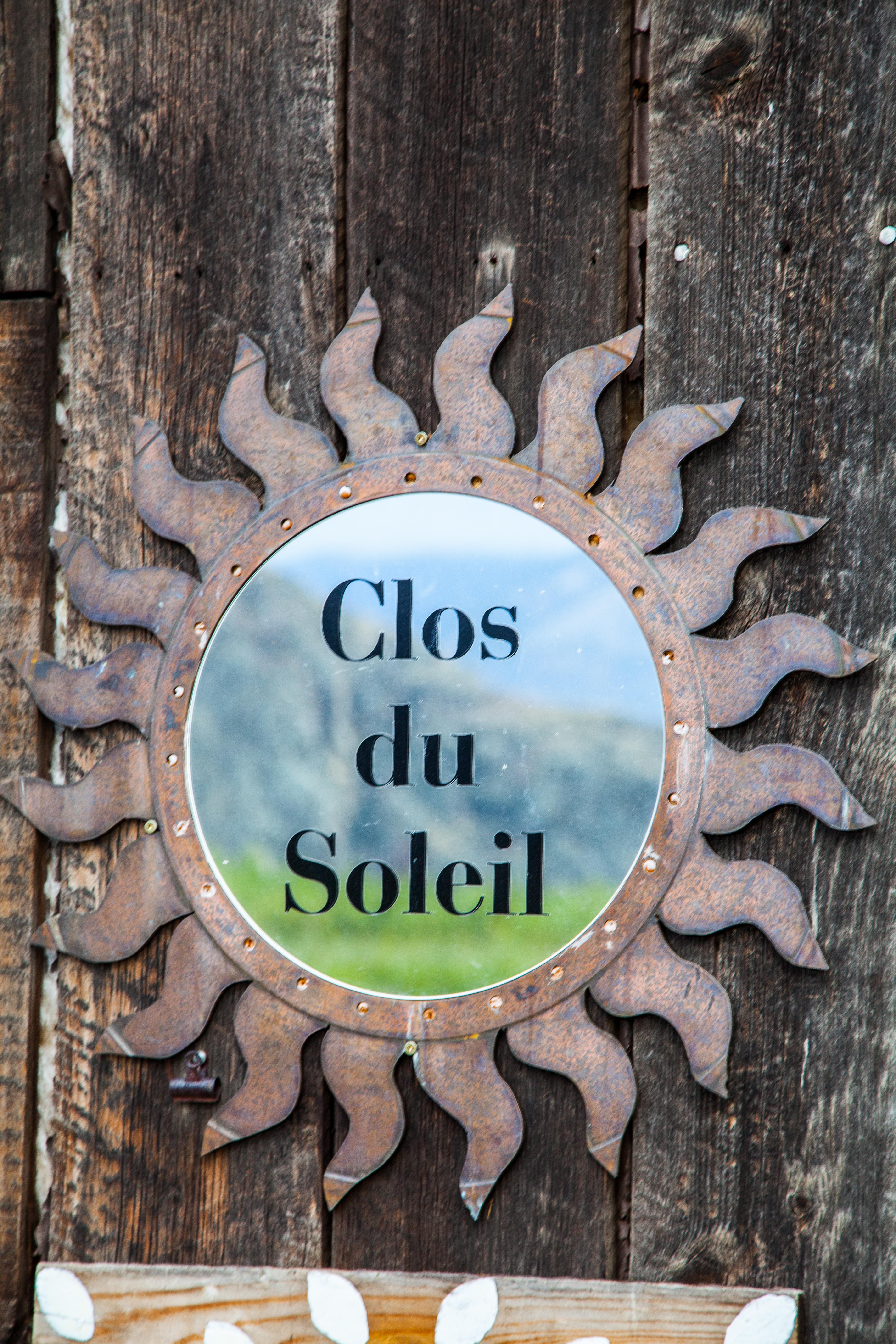
Our first stop, starting on the upper bench, was Clos du Soleil. Operating out of a charmingly repurposed barn (but with upcoming building plans), Clos du Soleil produces several excellent Bordeaux-style blends, a couple of single-varietals in their Growers’ Series, plus a Sauternes-style dessert wine, called Saturn, that’s worth buying a bottle of if you can get it. They’re also one of the only producers in Canada of Fume Blanc, an oaked Sauvignon Blanc. Owing to their upper bench location, Clos du Soleil grows most of their grapes on their estate, which was recently certified organic.
Right next to Clos du Soleil (but not on the map) is Herder. Their tasting room has a commanding view over the valley and is a great place to try out their excellent Merlot as well as a Merlot-driven Meritage blend.
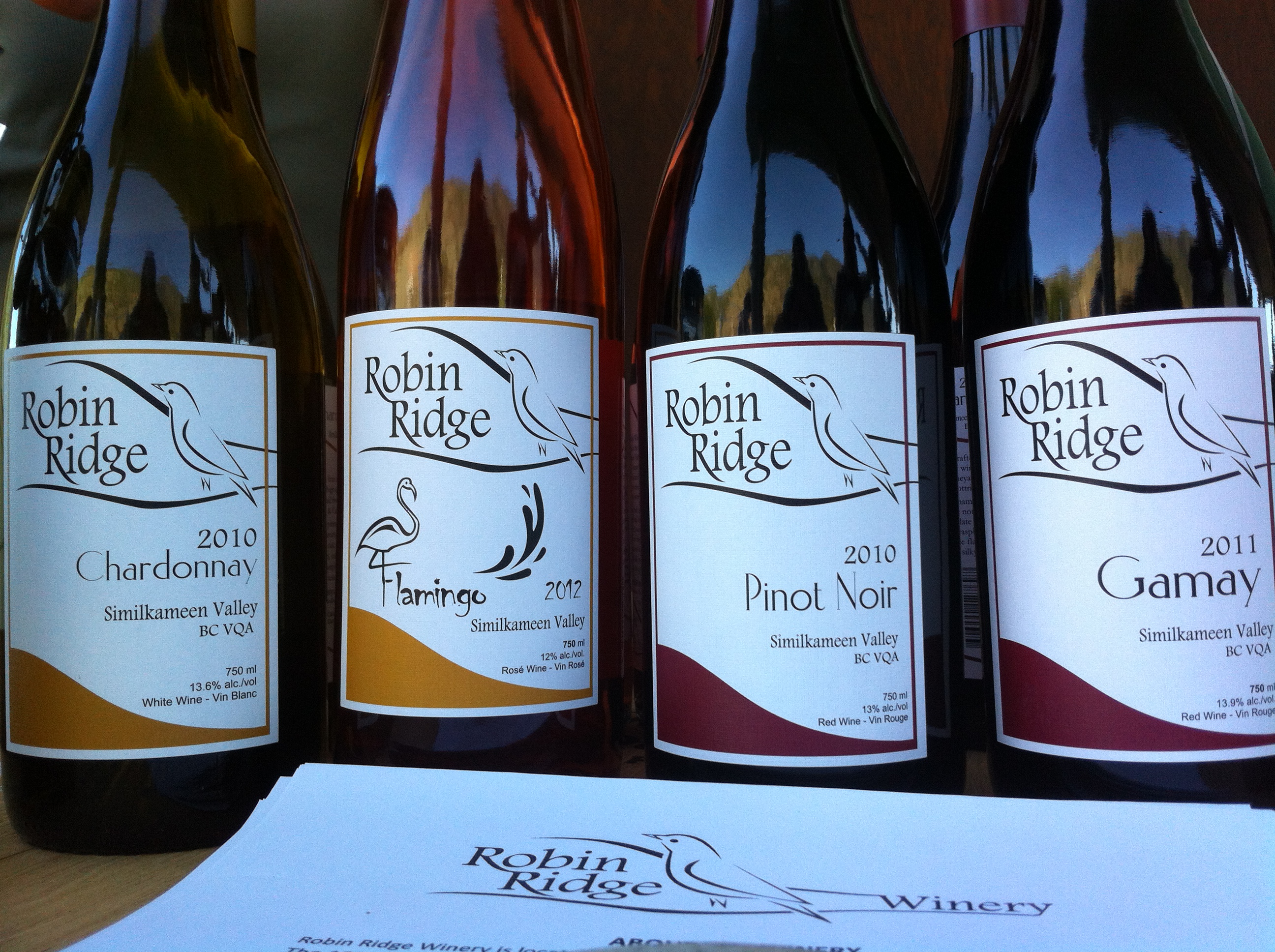
A quick U-turn down Middle Bench Rd gets you to Robin Ridge. Owner Tim Cottrill was both working the tasting room and loading up the start of the October harvest when we were there; nothing screams “authentic and unpretentious” than wine geeking with someone with wineskin-blackened fingers having to run back to the crush pad every 20 minutes to make sure things are still going the way they should be. They’re justifiably proud of the careful craft that goes into producing their wines, from the double-curtain trellis of their wines to being willing to experiment with uncommon varietals. Their Gamay is one of only a few produced by BC, and features a wonderful mix of spice and red berry notes with an intense finish. The 2011 Pinot Noir was reaching its peak, featuring an intriguing mix of strawberry and cherry with just a hint of vegetal goodness.
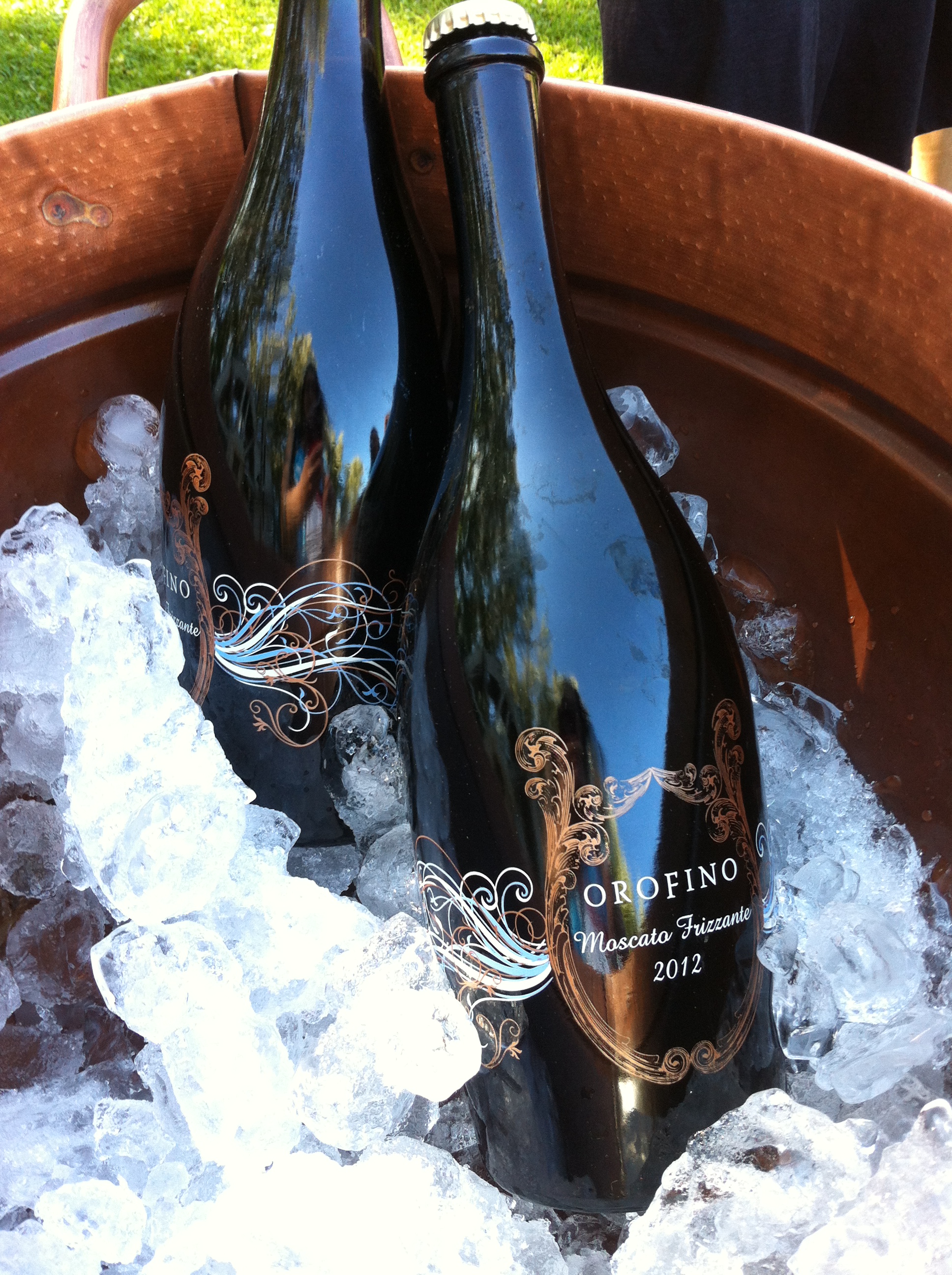
Moving further up the bench, we visited Orofino. Their strawbale-wall constructed winery (the only one in Canada) provides a huge amount of insulation from desert heat, as well as keeping temperatures constant for aging. This warmed my architectural photographer’s heart, as it’s great to see green building concepts being put to good use to produce really great wines. Orofino has a number of distinct vineyards around the valley; unfortunately they were out of all but one of their single-vineyard Rieslings. The big standout at Orofino was their Moscato Frizzante. Rather than producing a local version of Moscato d’Asti, the Frizzante is marvellously off-sweet but floral-forward bubbly that would make a fine opening to any good party!
Just south of Orofino is Crowsnest, owned by a German couple that also runs an on-site restaurant and B&B. While their wines weren’t entirely to my taste, their central location and restaurant would make them a good option for a long stop (or a place to spend the night) in the Similkameen.
Down the street from Crowsnest is Eau Vivre. I’ve always been a fan of unoaked Chardonnays, but it’s good to see some wineries putting a bit of oak on their Chardonnays without the overly heavy “buttered toast” aroma and mouthfeel from excessive malolactic fermentation that was (and, in some places, still is) common particularly in California-style Chardonnays. Eau Vivre’s Chard is a nice balance of classically fruit-forward Chardonnay with just enough creamy, oaky backbone. They also make a Red blend called “Buddhafull”, powered by Cab Franc, Cab Sauv, and Malbec, which is tasting well at the moment.
A ten-minute drive east gets you to Seven Stones, which recently completed construction on their Cave, which due to it being in use for a vertical tasting, we unfortunately weren’t able to visit. Their Row 128 Merlot is aged in French and American oak, and if you’re a fan of slightly oaky Merlot, this is a definite winner (and would probably be even more of one if left in your wine fridge and popped open this time next year).
The last stop on the way out of Cawston before the highway to Osoyoos isForbidden Fruit, which as its name suggests, specializes in fruit wines. I’m sorely tempted to fill a water bottle with Pearsuasion and violate local liquor laws in order to enjoy it outdoors with fish and chips from Pajo’s or Go Fish here in Vancouver (but disclaim all responsibility if you do and get caught!). In addition to fruit wines, they’re also producing a number of grape wines, including Sauvidal, a Sauvignon Blanc and Vidal. Yes, Vidal–the one that makes a lot of ice wine and the only hybrid varietal to be allowed in VQA.
What you really want to do at Forbidden Fruit is get something for dessert after a day of tasting, and for that one of their fortified Mistelle nectar wines will be just the ticket. I took off with a bottle of Plumiscuous, only because I couldn’t make a decision between their three Mistelle offerings and it happened to be knocked down to $20/bottle in the tasting room. Caught, their apricot mistelle, embodies everything you love about Okanagan summer fruit.
Whether or not one likes dessert, or dessert wines for that matter, I think that at least once in a person’s life, they should actually TRY a dessert wine with a food pairing just to see how wine can express itself. When we go out for dinner (or we have a gathering in our home), it’s always nice to end the meal with a little bit of sweet. Typically, this might consist of a cake, pie, or other baked good alongside coffee or tea. The question is, how many people have actually tried dessert wines with their dessert? Is this a matter of not really thinking about buying a dessert wine to go with dessert? Is it because one isn’t well versed in dessert wines and wouldn’t know what to buy to match the dessert? It works. Try it. Ask me questions; I can help!
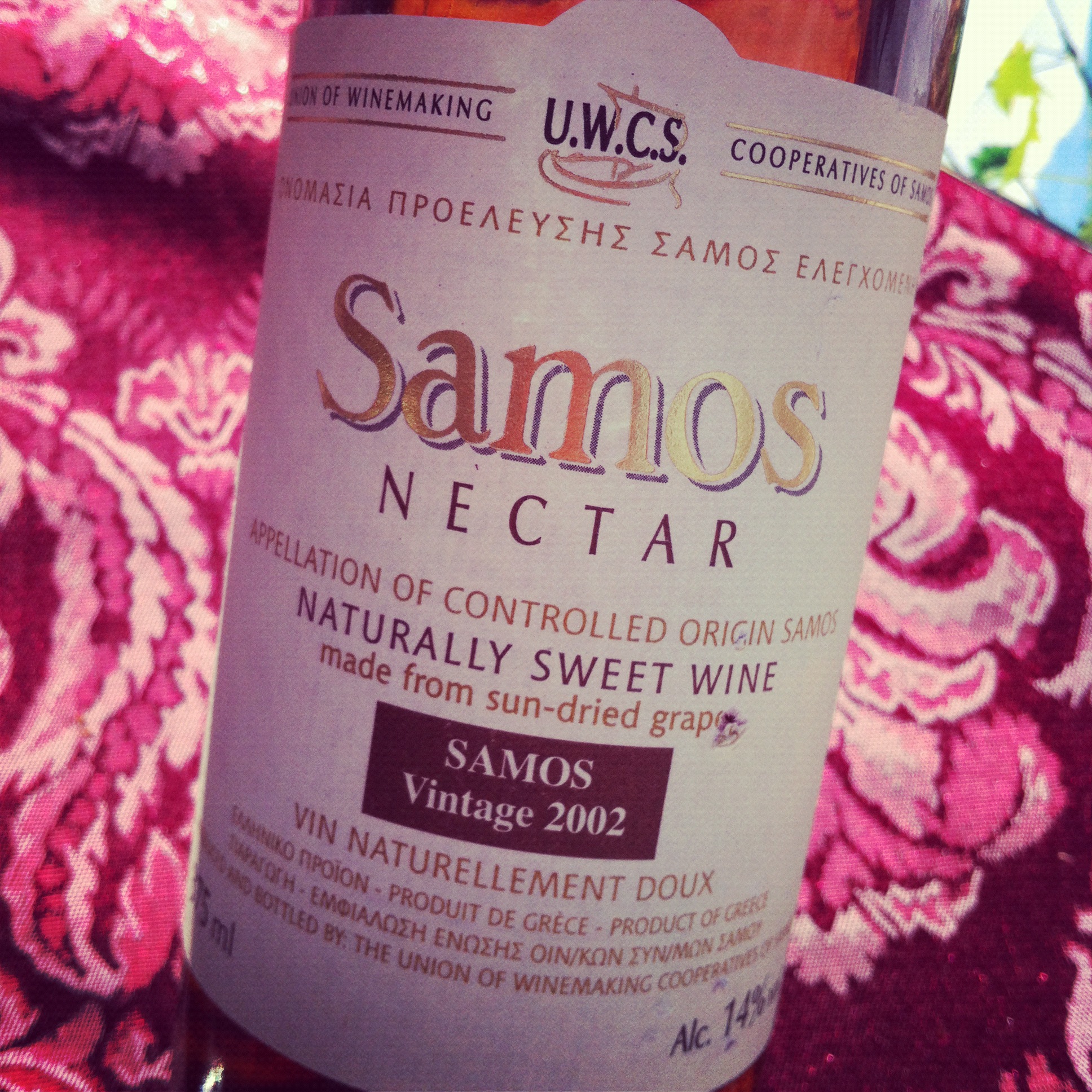
Of course, as mentioned in The Wines of Greece Part I, Greece is well known for their dessert wines. Muscat is grown in large areas around Greece, and to be honest, it does really well there. Samos is known for its complex and satisfying “Nectar”, which, if you really think about it, sounds oh so delish.
The muscat wine “SAMOS”, with a guaranteed appelation [sic] of origin, is produced from the grapes bearing the same name, the famous Samos Muscat Blanc à Petits Grains, cultivated on the slopes of Mount Ambelos, on the traditional island tiered terraces (“pezoules”) up to an altitude of 900 meters with every hectare carefully controlled for a low yield.
Controlled yields of any type of grape crop provide an opportunity for a winery to present the very best of the very best that their winery can offer. In other words, the best fruit is harvested, pressed, and vinified into small batches. The downside of the deal: more labour and higher prices for smaller portions of wine.
As mentioned earlier, Samos Nectar is probably the most well known out of all of Greece’s dessert wines. It commands stature, and so it should. A rival for Sauternes from the Bordeaux region, Greece’s Samos Nectar is just one of those dessert wines that you should experience at least once in your life. Yes, I used the word experience instead of “try”.
Nectar is a wine crafted from sun-dried grapes that have been patiently aged in oak barrels over a period of three years. It is most comfortable when accompanying hefty sweet and sour dishes, such as wild boar roasted with quinces or duck à l’orange. Needless to say, Greek traditional honeyed desserts such as baklava and walnut cake are friends of long standing to this wine.
Strangely enough, the above quote also mentions a dinnertime dish. What am I leading you to believe? Or at least try to believe? Dessert wines can indeed go with dinner. Funny thing, that! The sweetness in any edible dish, whether a dinner or dessert plate, accompanied by a dessert wine creates a perfect experience. Shall we comfortably say that the unimaginable is imaginable? One rule of thumb with food and wine pairing is that things “cancel” each other out. Two sweet things combined together don’t seem so sweet when tried together. What you are left with are the true nuances of the food and drink.
I was able to try a Samos Nectar at the Wine Bloggers conference, and I was not converted. That is merely because I didn’t have to be converted, but you know…
The Samos Co-Op Nectar 2001 White Muscat was a lovely sexy sugar bomb! Notes of grape (typical for the Muscat varietal), cotton candy, raisin, bread pudding, caramel, and butter toffee were all seducing me. Too bad I had to share. Would have paired perfectly with creme brulee, pecan pie, or a simple plain cheesecake. I’m trying to type, but I’m finding it difficult.
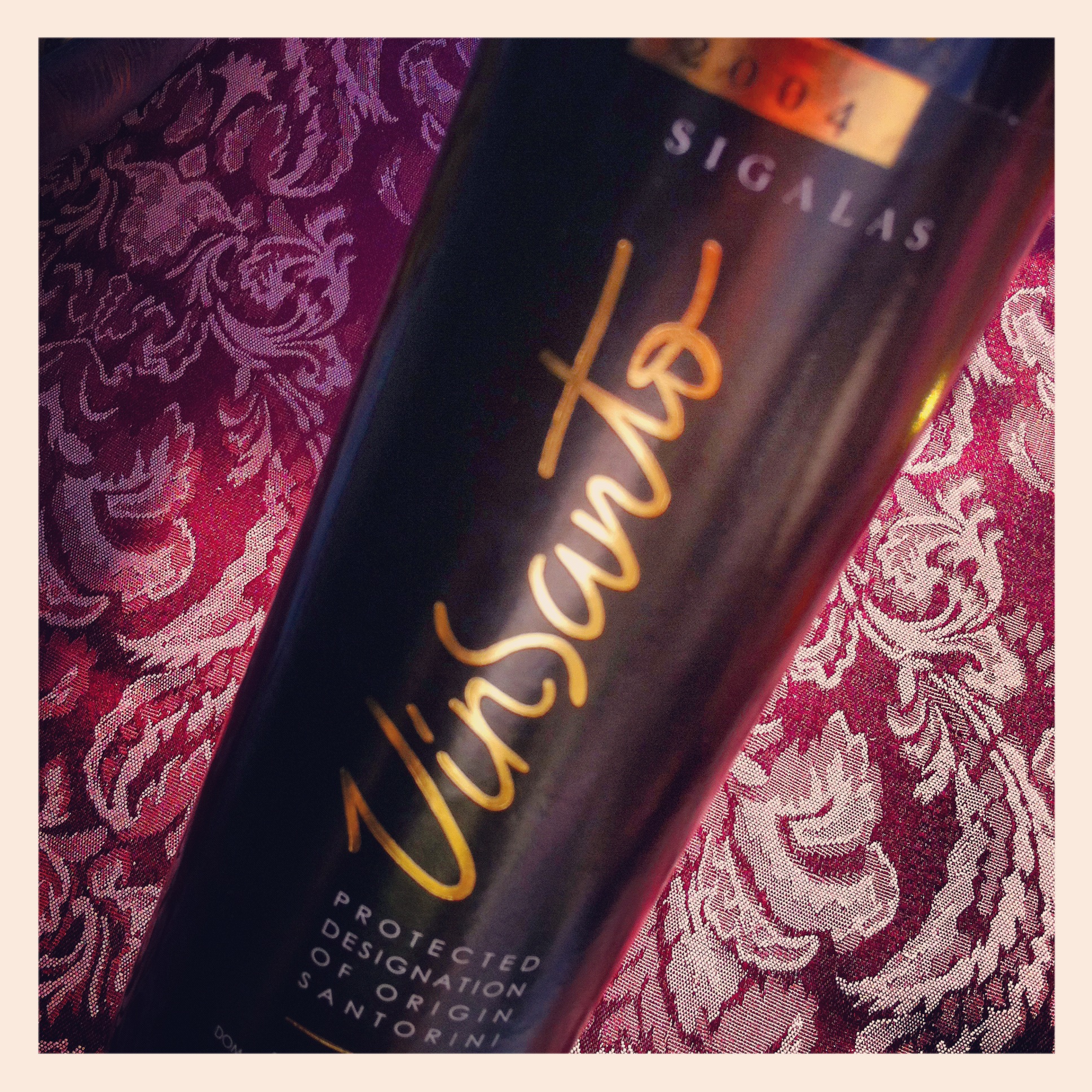
I also had the opportunity to try the 2004 Sigalas Vinsanto made from Assyrtiko and Athiri. This dessert wine was luscious; it presented itself to me as sweeter than icewine. If you’ve had icewine, you’ll know that that implies this Vinsanto was sweeter than sweet. It was a most beautiful amber colour, with notes of raisin, floral candy, toffee, and caramel. Surprisingly, it was light on the finish as compared to what I was expecting.
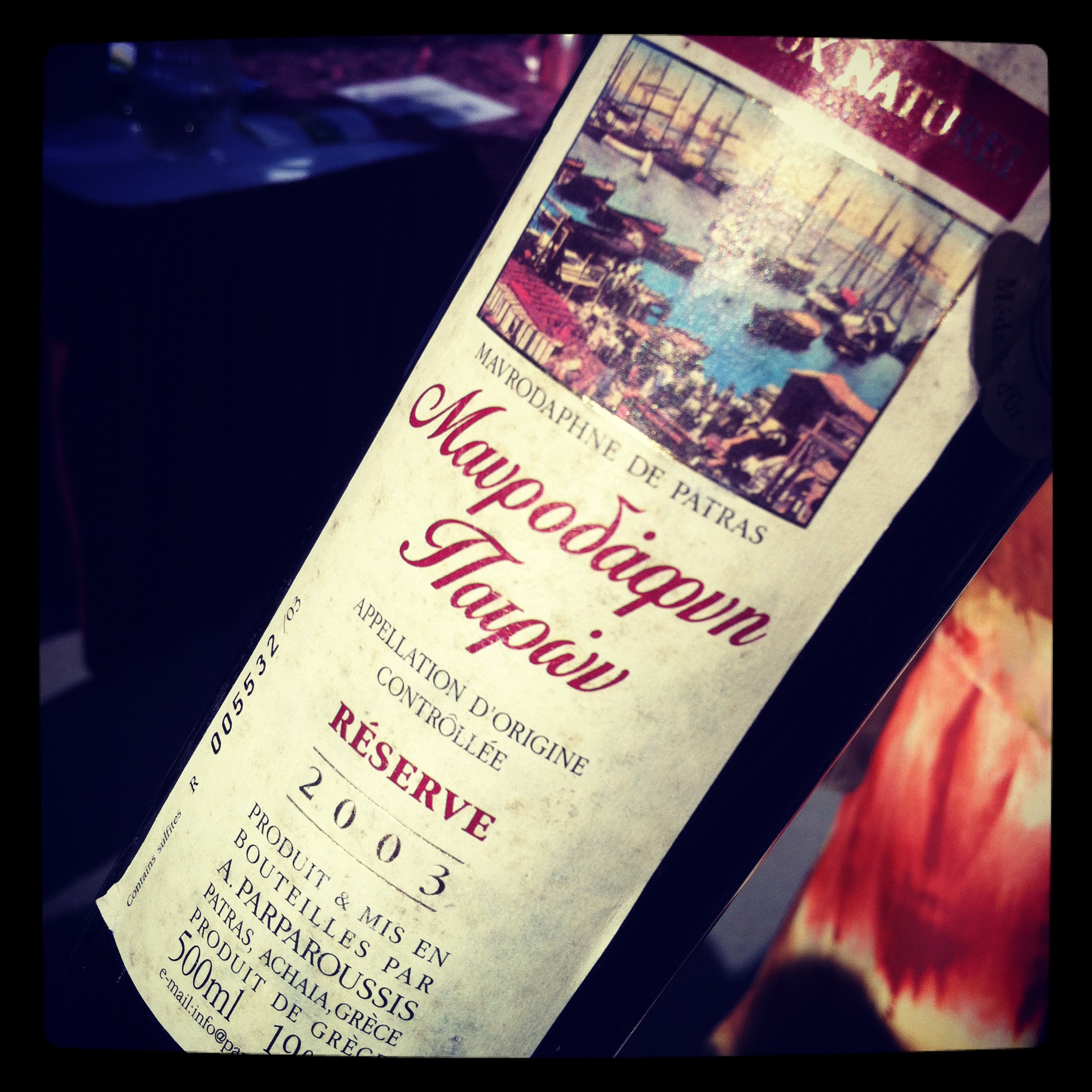
Lastly, a 2003 Parparoussis Mavrodaphne Patra was available for the tasting. This wine was cloudy, and the expert at the table was mentioning that some dessert wines are unfiltered. It was hot; the alcohol let off fumes in my mouth. However, the bouquet and palate made up for it: sweet raisins, gooey caramel, hints of coffee, and crunchy toffee made this dessert wine seem like the perfect liquid candy bar.
I’m so pleased that I was able to have the experience of trying some of the wines of Greece, and as a result, I’m intrigued by what else they have to offer. I wish, once again, that we had more of their wines in our market. I do hope that this four-part series on the wines of Greece has intrigued you, too. Go out and find some of their wines and give them a shot…or a glass, for that matter. You just may find that they become your next big fascination.





 The Demystified Vine
