The Demystified Vine

Taking the mystery out of wine exploration!

Inspired at the 2014 Wine Bloggers Conference

I was recently at the 2014 Wine Bloggers Conference in Santa Barbara, California, on a scholarship. During the conference, I attended a number of intensely interesting seminars, in addition to having some serious talks with industry folks about wine. I spoke with fellow bloggers, PR reps, wine writers, winery owners, and even winemakers. Throughout the conversations and seminars, I kept pondering on the relationship between wineries and wine bloggers, and that this relationship needs to be developed and intensified.

Relationships2-Brands-Rousers-Luis-Gallardo-300x300

Social web network marketing diagram Brands Rousers Luis Gallardo

Now, before you jump on this, read with an open mind. This post is not being written to complain about wineries intentionally disrespecting wine bloggers. The whole point is to create awareness and dialogue of where wine blogging stands, how wine bloggers are helping wineries, and illuminate the not-entirely-functioning relationship between wineries and wine bloggers. I am writing in an attempt to change perspective, not to cause a ruckus.


Corbett Barr – “Superstars & Tastemakers”

The keynote speech, conducted by Corbett Barr, entitled, “Superstars & Tastemakers” was an eye-opener for many. Barr’s entire message was centered on the fact that there is a bright future for wine bloggers. How could I not agree? The dawn is already here.

In North America alone, there are more than 740 wine bloggers who are passionately sharing their stories, experiences, favorite wines, interviews, photos, education, passion, connection, and opportunities. Wine bloggers are writing about what they love: wine.

Now, before I continue my thoughts, I must take the time to note that I fully understand Corbett Barr’s message that:

Drinking wine + blogging ≠ Wine blogging

There are wine blogs focused on merely reviewing weekend party wines, or those that fail to do their research. I get it. However, for those wine bloggers who are actually dedicated and maintaining a blog (it is hard work), I think that these writers should be more intensely supported by wineries.

Barr highlighted that most dedicated wine bloggers have various struggles including: motivation, audience, design & technology, respect & recognition, finding opportunities, earning a living from their writing, and reaching their full potential. Why? Writing for ourselves is fine and dandy, but we are passionately trying to share our stories and knowledge with others. Gaining an audience from the ground-up is a difficult mission. Wine bloggers spend countless hours attempting to build audience in one way or another. Did I mention they do it for free? Additionally, wine bloggers crave to share their experiences with the world, and that sharing includes material on wineries & their wines. There is more opportunity for a wine bloggers’ voice to be heard if wineries put in more effort to support them.

Being in the Trenches

One thing is for certain: wine blogging can be very powerful, and it can also be like being in “the trenches”, as Barr noted.

When good wine bloggers are not recognized as “wine writers”, we are left in the dust of those who are fortunate enough to host local newspaper wine columns or write general articles in government liquor store magazines about Sauvignon Blanc or Pinot Noir. The truth of the matter is that wine bloggers are also driving forces for the wine community whether or not people will admit it. Wine bloggers do not get paid to publish their ideas, thoughts, and knowledge about wine. Additionally, when it comes to writers getting paid for writing, the writing world is in a downward spiral. Generally speaking, writers are financially compensated less and less as the years pass; more people are writing for free or for very little. These writers are almost at blogger status. So, what is the real difference?

Not all established writers are critics or have their MW (Master of Wine) or MS (Master Sommelier) titles. I appreciate that those who have these certifications are deemed as the “experts”, and that they could talk lovingly about wine for hours. They painstakingly worked to get where they are; I will never deny this for one split second. I only have my WSET Advanced Certification, but I will tell you one thing: I could talk your ear off for hours as well. I also intensely enjoy educating others about wine and its elegant delicacy. Words are powerful to everyone in any context. Again, what is the real difference?


Wine Bloggers Are the New Wave of Wine Writers: Give More Respect

Wine bloggers are the new wave of wine writers. Our voices are gaining strength, and we are increasing in onandon569number. However, readers of anything published should still be critical about distinguishing what is considered good and this-needs-improvement material. I subscribe to this.

That being said, I am finding a reservoir of courage within me to speak up for a group of dedicated writers, who are trying hard in their own authentic ways to be heard and to communicate their passions about wine and the industry. We are doing it amongst the well-established writers.

As such, I need to reiterate a comment that Barr mentioned in his keynote speech: that the “wine community is not as tight” as it could be. This signifies that change needs to happen; there are many relationships (of various types) that have the opportunity to be strengthened.

Bridge the Gap Between Wineries and Wine Bloggers

I want to encourage wineries to help bridge the gap between themselves and wine bloggers. If a wine blogger spends his/her time researching, interviewing, questioning, deconstructing, writing, and educating his/her readers and the social media world about your winery, show them some love. To my knowledge, although I am sure it happens somewhere in the world, wineries are not paying wine bloggers to publish stories on them or reviews about their wines. Wine bloggers want to tell these stories. We are purveyors of biographies, history, and narratives much in the same way that paid professional writers are. Bloggers of wine are essentially, through their blog posts, showing enthusiasm for wineries and what they are offering. Why not share this?

If I can also bring in social media to this argument, then I should not leave out the fact that customer relationships are now in “Likes” and in “+1s”. This is how people share, show appreciation for something, and communicate interests. It could be argued that a winery has been advertised (for free) for every read wine blog post that gets a “Like” or a “+1”. Paul Mabray (@Pmabray), who spoke at “The Business of Wine” seminar, said:

There is an average of 1.5 million organic conversations about wine [on the internet] each day. Wineries get 2-20 organic messages a week, and over 80% go unanswered.

If we deny that social media is fostering organic conversations, we have a problem. Wine bloggers are utilizing social platforms in a way that has never been seen before to communicate their messages and interests about wines, wineries, and the industry. Mabray also added that, “Bloggers are the people who help consumers find wine, discover it, and buy it”. In essence, wineries need wine bloggers, and bloggers need wineries.

Thus, Wineries, there is an unstated relationship between you and those who blog about you. Wine bloggers create opportunities for your winery whether or not you realize how deep that may go. Please, be picky; it is a right. I am not suggesting you give respect to every Joe-Blow that writes about a bottle of your wine. However, do not ignore those who are fostering education in others about your wine and winery practices, who do their research, who want to engage and share.

Bloggers, if you are writing about wineries, this unstated relationship exists between you and the wineries you write about. You provide a number of things for wineries including your time and free advertising (which, we all know, everyone pays a lot of money for).

I want to create dialogue about how this relationship is being fostered.

If you are a winery:
What are you doing to help support wine bloggers? Are you doing more than just retweeting the bloggers link one time? Do you thank them? Do you consider a solidly-written write-up just as good as an accolade? Why or why not?

If you are a wine blogger:
How have wineries responded to your posts about them? How have they shown support for your work? Do you feel they could be doing more? How so?

I hope that you agree and disagree with some of these things. It means that I am doing my job of helping you think critically about this topic. I encourage both wine bloggers, winery folks, and others, to think about this.

Thank you kindly in advance for reading.

Cheers!

Note: unless stated, the opinions written are my own and do not represent the Wine Bloggers Conference.
I recently returned from a two-week jaunt through Italy – one of the world’s leading producers of wine. This was a pleasure trip for me; I haven’t had a real vacation in years. Why Italy? First, my mother’s family is Italian. Capisce? Secondly, I not only wanted to jump the pond that is the Atlantic, but I also wanted to try some of the glory that is Italian wine that we don’t get enough of in our North American (Canadian) market.

I found myself enjoying a few glasses of some not-worthy-to-be-talked-about-in-detail red on the flight over the Atlantic, since I was finally on a holiday. It’s all they had! What do you want me to say? Okay fine. Here’s my tasting note: it was red. However, my first few nights on holiday dining in Ostia Antica’s beautiful beach-side restaurants proved to me that I was about to take on a food & wine adventure.

IMG_2804

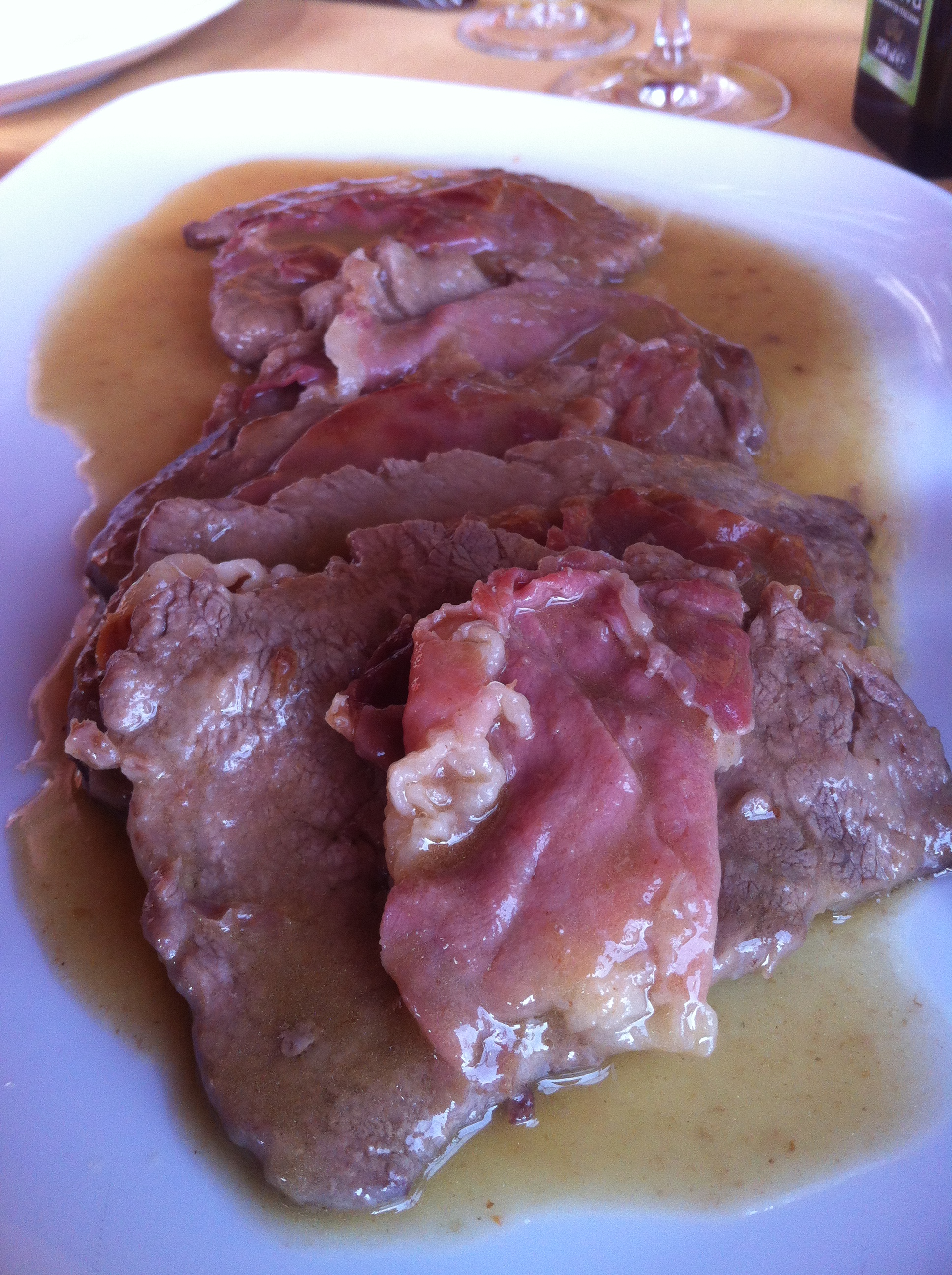
Saltimbocca

IMG_2807

“Nord Est” Vermentino

My housemate, Kat, and I landed our first real meal deal at a beachfront property on the western coast of Italy just outside of Rome. We enjoyed local Roman-inspired dishes like vegetable risotto with zucchini flowers and saltimbocca (a dish that consists of wine or saltwater marinated veal, prosciutto, and sage). To pair with it, I chose a Vermentino Di Sardegna called “Nord Est” from Cantina del Vermentino. This crisp and clean white went down easily under the hot Roman sun. It didn’t overpower the food, and the food definitely didn’t overpower the wine. This bottle of beauty had gorgeous citrus notes with hints of lime zest, light herbaceousness, and that salty almond skin note that you would expect. While we weren’t on the island of Sardinia enjoying this wine, we at least sat facing the island from the mainland while sipping it.

IMG_2827

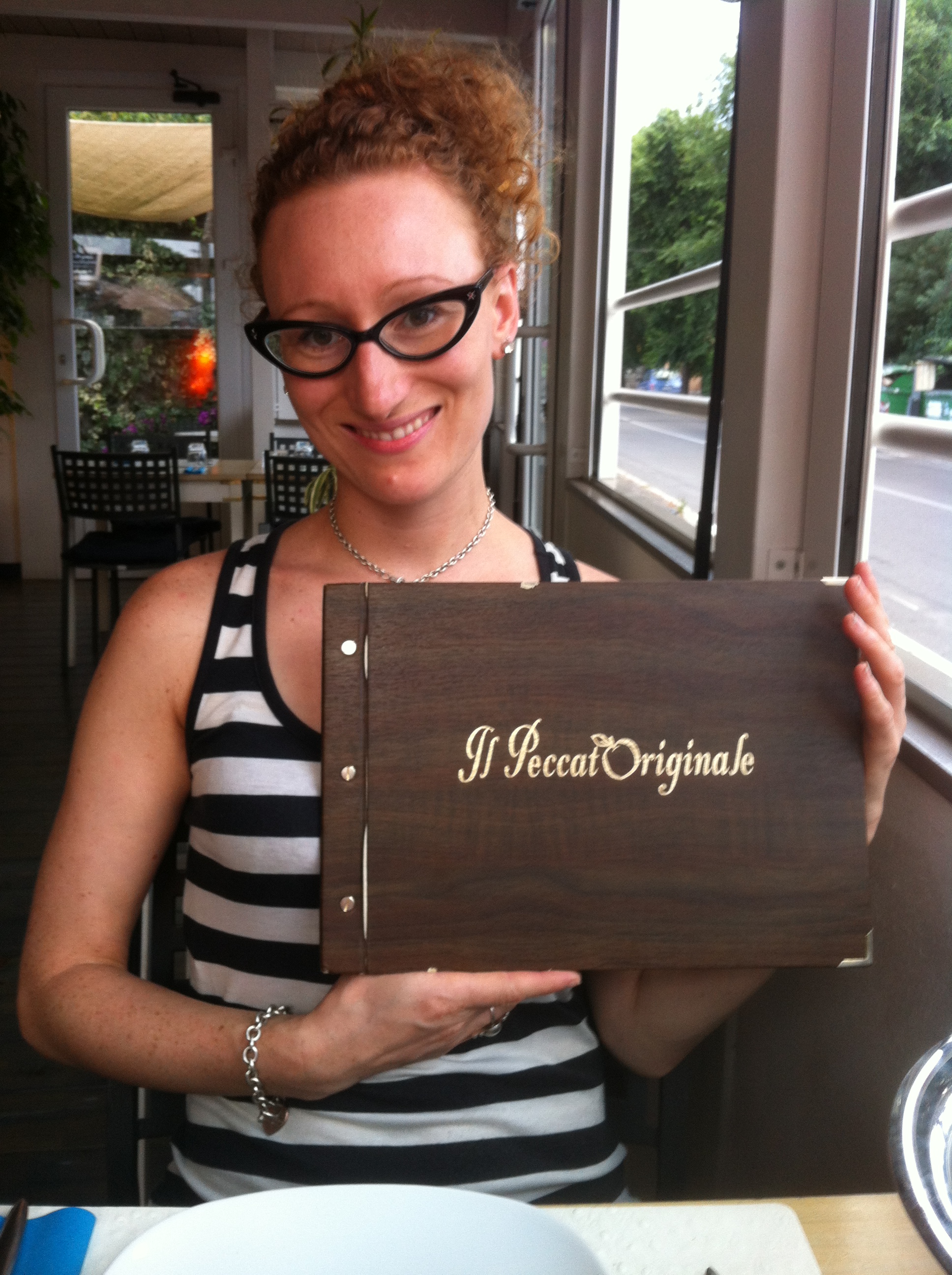
Kat & the Il Peccat Originale menu

IMG_2825

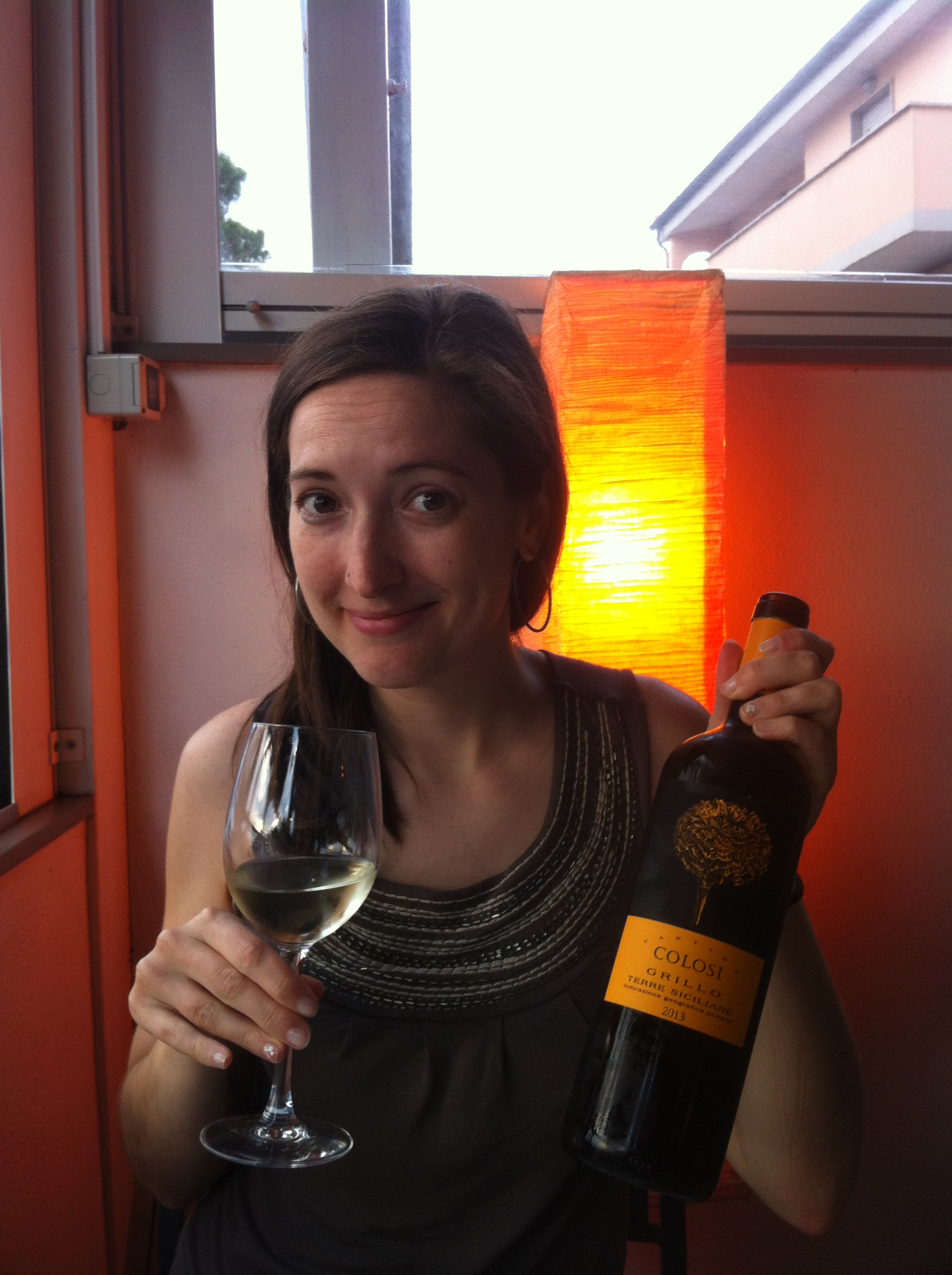
Me holding the Colosi Grillo

The following evening in Ostia Antica, we ate at this quaint little ristorante called, “Il Peccat Originale” which translates into Original Sin. Our experience here was actually pretty fantastic, if I do say so myself. We innocently sat at our window-side table and ate and drank until we were sure we would have to roll ourselves back to the cottage we were staying at. Here we enjoyed a 2013 Cantina Colosi Grillo IGT from Sicily. As soon as I saw Grillo on the wine list, I was very excited! (Again, we don’t see a lot of Grillo in Vancouver.) Lemon, stone fruits (white peach & hints of nectarine), whispers of melon rind and star fruit all drifted from the glass with some aeration. The palate was dry, with a medium body, and was less fruit-oriented, but had interesting green apple and yellow plum notes with a kickback of herbaceousness and minerality. I’ll take another bottle! I get it now. This is where the oh-so-sinful aspect comes in.

In Part II, I’ll revisit my wine adventures in the Veneto and Florence regions (including a visit to an organic & biodynamic Chianti vineyard). Bubbles are on the horizon!

Cheers!

Ever have those moments where you accidentally walk in on someone’s conversation and you feel really awkward about it? Then you’re asked to join, and you get to try some amazing wine? Alright, maybe that doesn’t always happen, but I’m sure you’ve had a similar experience of some sort. This is how I met David Goudge of Sea Star Vineyards from Pender Island, and boy, am I glad I walked in on that conversation!

As David was in the middle of doing a tasting at Broadway Wine Shop, I was fortunate enough to try his Ortega 2013, Siegerrebe 2013, and the Blanc de Noir 2013. I was very impressed with what I was tasting from this small winery that is just hitting the pavement. I wanted people to know who they are. [pause] Which is why I am here.


Sea Star Ortega 2013The Ortega 2013 was beautifully well-rounded with ripe stone fruits and an aromatic wild flower bouquet. With a good mouth feel and not too high in acid, this wine brought me to a summer picnic on the beach or under the shade of an old oak tree (not that we’re allowed to responsibly enjoy a libation on a beach or in a park in BC or anything…). Hints of honeydew wafted from the glass. Verdict: Yum!


Sea Star Siegerrebe 2013Aside from not too many folks being able to pronounce Siegerrebe correctly (SEE-geh-RAY-buh), this vitis vinifera grape is not widely planted anywhere on the entire planet. Needless to say, I got very excited. Sea Star’s Siegerrebe 2013 vintage was also stunningly aromatic, with a lively grape note. Hints of white pepper, honey, and ripe green pears were all exhibited. Because of its lower acidity level, this wine would pair perfectly with spicy east-Asian dishes.


Sea Star BdN 2013The 2013 Blanc de Noir was an angelic pink colour. A light intensity wine made from Pinot Noir, this libation gracefully presented true wild strawberry notes, tart cranberry, and snappy rhubarb. A faultless summer sipper.


Besides the fact that I gained a deeper intrigue about the winery because they are growing Ortega and Siegerrebe, David was very kind to take some time out to answer some of my questions about Sea Star Vineyards and Winery a few days later.

The Demystified Vine: One of the most important things I learned is that “everything is in a name”. Tell me about why you decided to call your winery “Sea Star Vineyards”.
David Goudge: To the best of my knowledge no other vineyard in BC actually is a beachfront property. Ours is, and to me viewing sea stars while beach-combing or kayaking on a calm summer day are symbolic of the tranquil nature of Pender Island and our location in the Salish Sea. The 7 wines all depict a different local sea star that are found in the waters that surrounds us. We are proud to be growing our own Coastal grapes – authentic about the wines that we craft.

Photo used with permission from David Goudge 2014.

Photo used with permission from David Goudge 2014.

The Demystified Vine: Your vineyard is organic. What were your reasons behind going organic?
David Goudge: We are growing our grapes organically, as well as with a healthy respect for biodynamics and sustainabilty. But we don’t put this on our website or labels because these have become ‘buzz words’. Instead visitors to our vineyard can see for themselves when they visit our vineyard – examples that include using a rainwater capture pond for irrigation, and our Southdown Babydoll sheep to manage weed control rather than pesticides. They are productive at fertilizing as well!

lawn-mowers-seastarvineyards

Photo used with permission from David Goudge 2014

The Demystified Vine: I think it’s commendable that Sea Star Vineyards has such a strong hand in fundraising and the community. Providing support for Pender Animal Welfare Society (PAWS) and the BC SPCA, for example, show a strong commitment to strengthening awareness around important causes. Tell me a bit more about your community endeavors and why it is such a priority to SSVW?
David Goudge: We support 4 animal welfare causes because we care deeply about this issue, and the community of Pender Island cares. The World is experiencing so many challenges in terms of disappearing/diminishing habitat loss, but Pender is like a nature preserve and respectful of our environment. This is the riding of Elizabeth May after all!
The overall connection and support we lend to the community is also just a smart business practice.

The Demystified Vine: What is the reasoning behind growing not-so-well-known or popular varietals such as Ortega, Siegerrebe, and Shoenberger? I think BC’s climate is great for these grapes to thrive. What is your opinion on why they aren’t as popular?
David Goudge: We are proud to be growing our own Coastal grapes – authentic about the wines that we craft. 100% of the grapes we used are grown on Pender Island, grapes that grow well in our coastal climate. The only exception is a Meritage blend that is currently aging in oak and will be released in 2015. In our opinion some varietals such as the Merlot, Cabernet Franc and Cabernet Sauvignon that go into this blend can’t be successfully grown in our climate so these were sourced from 4 vineyards in Oliver and Osoyoos. So knowing what varietals will grow well, and what to purchase is fundamental.
The wine-lovers continue to be intrigued by unfamiliar varietal choices (and new wineries). I believe Ortega is finding that popularity already, and Siegerrebe will become increasingly popular even if most people stumble over the pronunciation.

The Demystified Vine: What is Sea Star’s mission, and how does the winemaking philosophy contribute to that mission?
David Goudge: Our mission is simply to make excellent wine. Our winemaker Ian Baker’s philosophy is that ‘it all begins in the vineyard’. Great grapes make great wine, and inside the winery the mantra is ‘clean, clean, clean’.

Thank you so much, David, for taking the time out to help demystify a little part of BC’s wine culture. Here’s to many more vintages! >clink<

Cheers!

Yes, this is an unedited post. I was sitting at my computer, and I suddenly had this urge to write this. So, I thought I’d share it. Folks, I’m going informal tonight!

i love wine

Want to know why wine is amazing?

Wine is amazing because of its mystery, its history, its bounty, and the pleasure it brings. It is a force of nature that is always changing; vintages are always different because Mother Nature says so. Different grapes grow differently in different places. Sauvignon Blanc tastes like tropical fruits in New Zealand, but claims more herbaceous, grassy notes in North America. Wine making styles are used to take nature’s gift of grape juice and make the juice express itself. There are over 10,000 varietals of varying clones and types. A wine expresses itself through acid, sweetness, body, tannin, intensity, its palate, its bouquet, its life span, its region, its growing conditions and types, its maceration times (or lack thereof), aging, the brix it was harvested at, and the list goes on. This is complicated stuff, and I wish more people would appreciate what goes into that glass that they sip from. Or for those of you who don’t know much about wine, let me tell you that the process of getting that liquid into your glass is really fascinating and intriguing because it is literally a long-term, dedicated process and commitment both in faith and financially. I can’t forget to mention the joy it brings people, the commitment individuals have to learn an entirely new language and understanding of how nature works. The opportunities it brings to clink raised glasses in a toast of celebration. The warm feeling it gives you on a cold winter night, or even the way certain wines pair fabulously with cuisines from all over this good Earth.

Wine is art.

Luke & Calli from winecountrybc and I recently got together one afternoon to chat about wine snobbery and some of the aspects revolved around the evolution of the human palate. Check it out!

Luke W's avatarWine Country BC

When did you start drinking wine? Was it good? Was it sweet? Be honest…

There’s a psychological reason for that sweet tooth according to Andrew Barr, the author of Wine Snobbery: An Insider’s Guide to the Booze Business. It’s not a new book by any stretch but Valerie chose a couple of pages that were particularly interesting. The essential argument is that we have an innate dislike of bitterness so we have a natural tendency to seek out sweeter wines. As we age, our palates evolve and the assumption is that we learn to desire that bitterness and see sweet things as being ‘immature’ or ‘simple’. This argument rationalizes the disdain and condescension for simpler, sweeter wines like Mateus, White Zin’s, or the Liebfraumilch’s of olde, which can never be ‘taken seriously’ in the context of fine wine appreciation.

But does this argument hold water? Or maybe wine? Calli, Valerie, and I try…

View original post 30 more words