The Demystified Vine

Taking the mystery out of wine exploration!

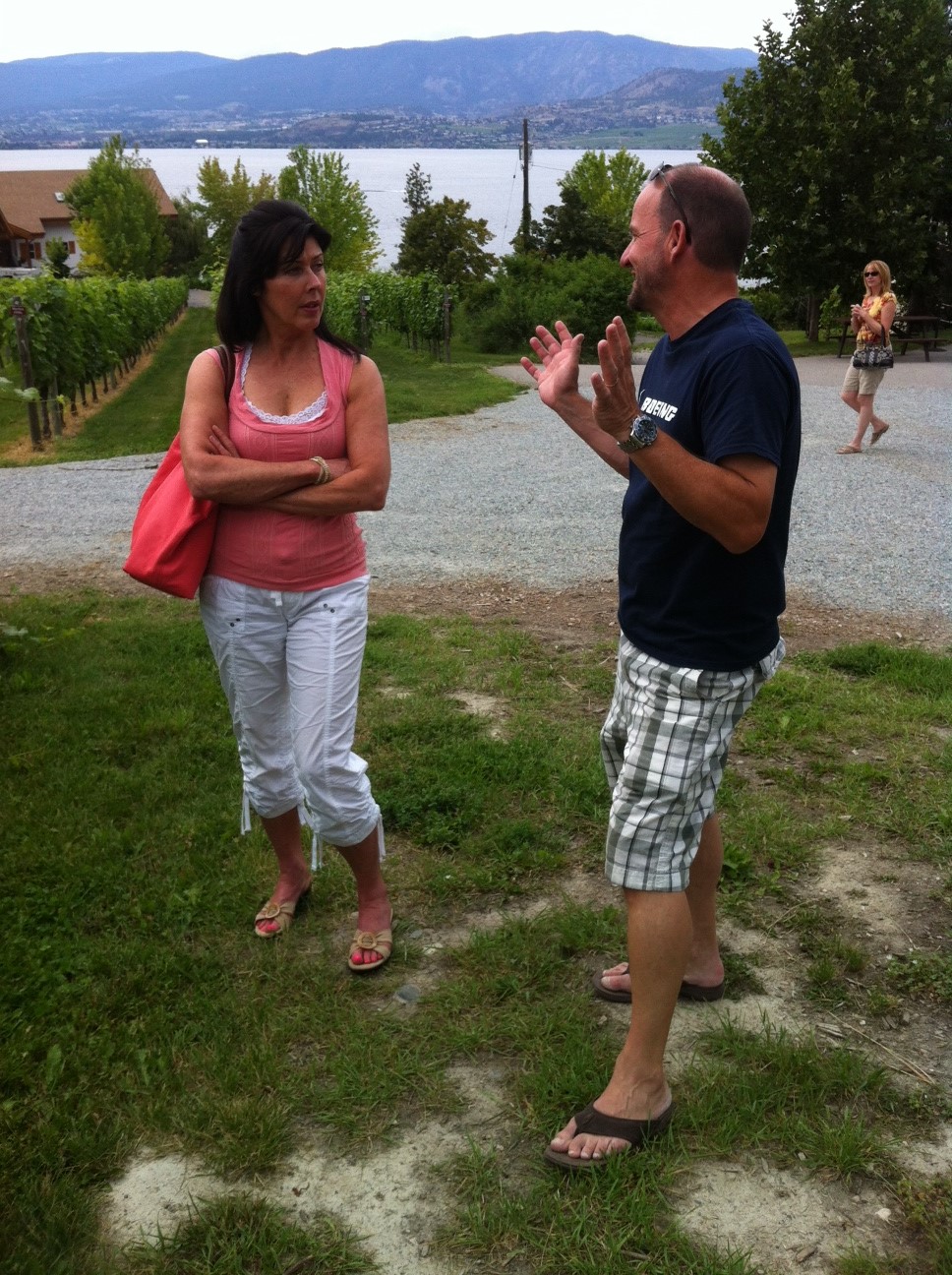
Recently, my colleague Brenda Latta and I stopped into St. Hubertus & Oak Bay Vineyards to have a little chat with Andy Gebert – one of the owners of the vineyard & winery.
photo(1)

Andy & Brenda chatting about heat levels in the vineyard

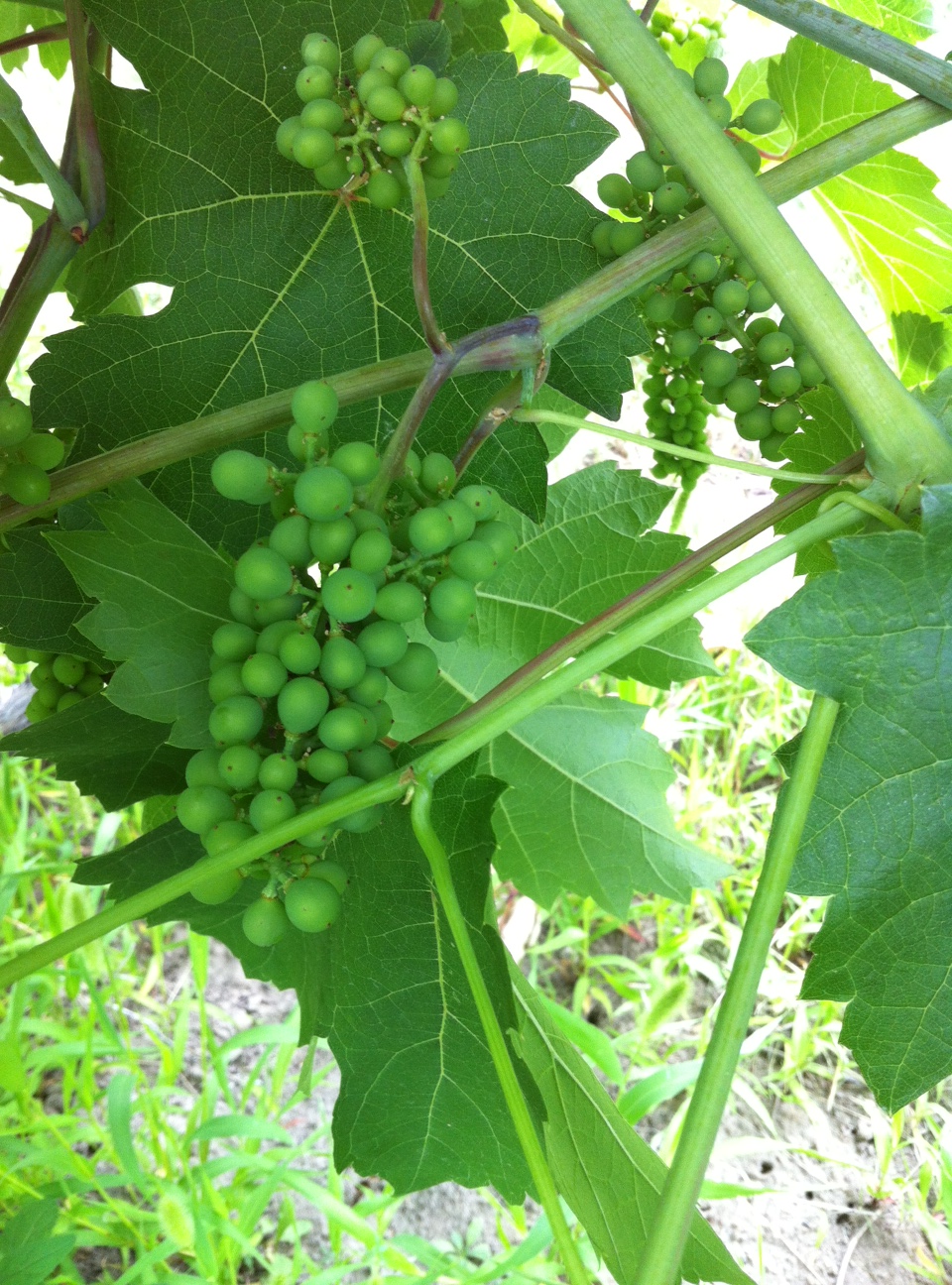
During our visit, we learned that they recently planted 6,000 brand new Chasselas vines in the back end of the vineyard. It was also great to walk amongst the already established vines and see how the grapes are doing during this very important fruit set phase. Their Gamay Noir is coming along nicely, and Andy mentioned that they will probably end up green harvesting some of the vines. Additionally, the Marechal Foch leaves are currently gigantic canopies, providing shade for the grapes. Due to the high amount of rainfall in Kelowna during the month of June, the berries are about halfway to being fully grown, and Andy said that they are way ahead of schedule.
photo(2)

Ripening Marechal Foch

After trying some wines in the tasting room, Andy suggested we try their 2007 Oak Bay Vineyards Pinot Noir. Following a meal of Mediterranean salads and vegetarian pizza, we opened the bottle in our hotel room. We were very pleased with how varietally correct this Pinot Noir was.

Brenda and I wholeheartedly agreed that this wine was well-balanced. It’s soft plummy and red berry fruit stood proud and tall, conveying the ethereal nature of the very best BC Pinot Noirs. A unique earthiness and spiciness manifested itself on both bouquet and palate, and inklings of brettanomyces were noted. A medium to medium (-) acid wine with softer tannins and a medium body, for $25.00, this Pinot Noir is a steal.

photo(3)

Classic cherry notes, and hints of vanilla from oaking complemented the peppery nature of this Pinot. All good ageable Pinot will develop forest floor and mushroomy notes, and this ’07 vintage is beginning to take on a new face. Drinking well now, one could also still age this beauty for another good 1-2 years. Luckily, there are still a few bottles left.

Cheers!
During the Wine Bloggers Conference 2013 in Penticton, BC, Luke Whittall of winecountrybc and I had a chance to sit down and chat about what The Demystified Vine is all about, why I love BC wines, and other random goodies.

I think our style could be called “witty-banter”.

It was a pleasure to meet Luke face-to-face, as he is doing some amazing work with his podcasts. His friendly countenance and easy-going personality made it really…well…easy, to talk to him.

Check out the following link for a preview of the podcast. Most of all…enjoy! There’s a few good laughs in there!

Podcast 138 – A Conversation with The Demystified Vine.

Cheers!

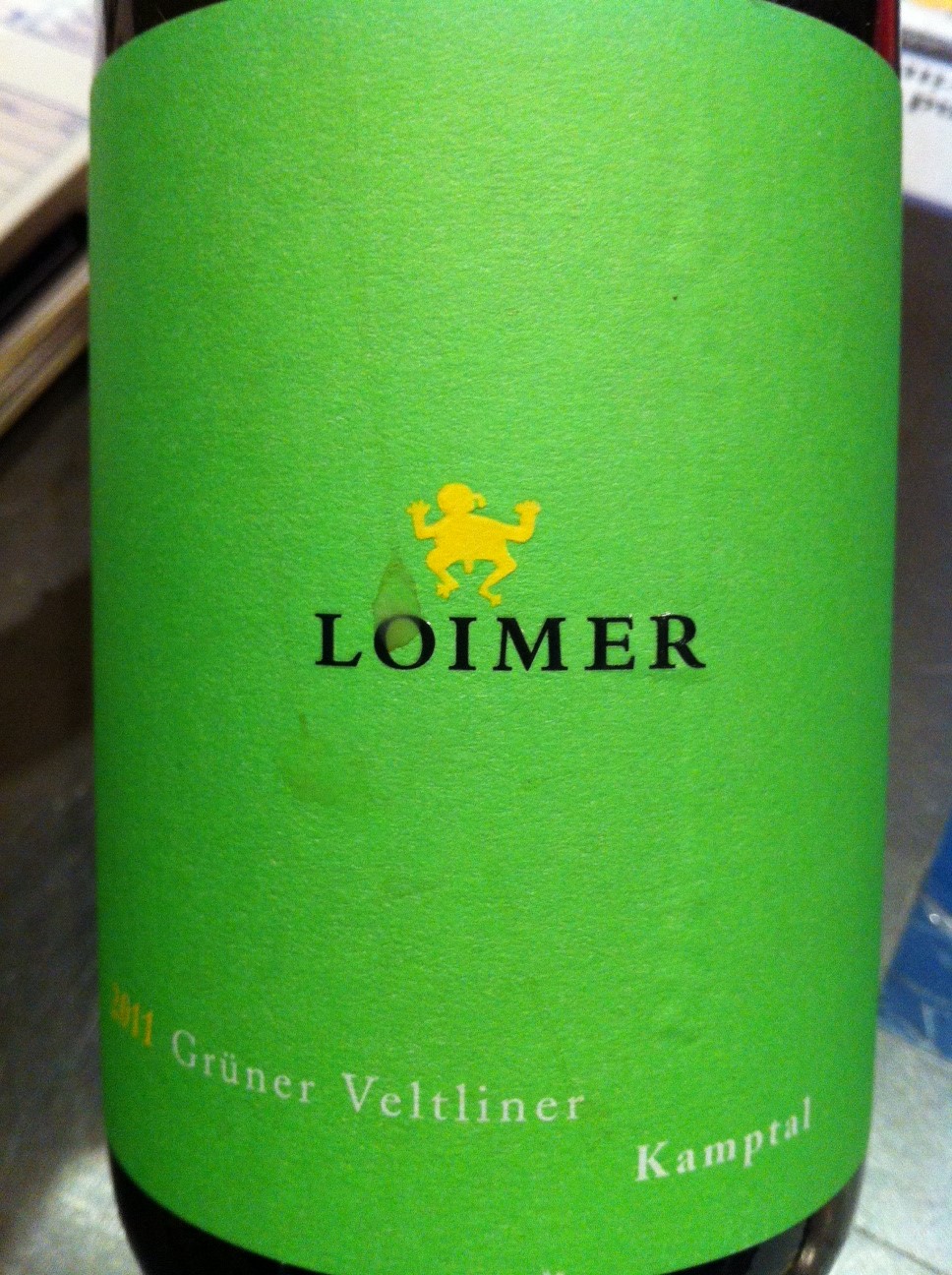
Ever have those moments when you can say you love your job? I did when I tried the Loimer 2011 Grüner Veltliner from Kamptal. You pretty green label, you!

This would be a wine I’d want to have available in ten years, but unfortunately, most wines nowadays aren’t made to age. So, as this is a DNNIFA wine (Drink now, not intended for ageing), go grab some.

photo

Photo by Valerie Stride

Youthful and awash with citrus and green fruits, this Grüner Veltliner shows the varietal quite admirably. For about $30.00 CAD, you can pick up a bottle. To be honest, it is probably one of the best Grüner Veltliner’s I have tried. Now, I haven’t gone hunting for Grüner ever –just saying– but I’d say if you were to look at what we have in our market, this is going to be a winner if you’re looking for some Grüner, baby.

The tartness is accentuated by the lemon curd and pear you’ll find being carried on the bouquet. Palate-wise, this dry, acidic white wine will please those who enjoy a lighter, more mineral-driven drink. If you like a bit of viscosity in the mouth, don’t throw this one to the curb.

Grüner Veltliner is from Austria (although I’m sure there are small spots of it somewhere else in the world…). Austria is only starting to recover from its reputation for sweetening its wines with diethylene glycol. Note the word “die” in “diethylene”. For those who aren’t up on their chemical compounds, which, most of us probably aren’t (including myself), that is A.K.A. anti-freeze.

According to the White Wine Guide by Jim Ainsworth,

The whole of the country’s wine industry was tarred with the “anti-freeze” brush, and what exports there were plummeted. In some countries, even sales of Australian wine suffered! The effect this had on Austria’s wine authorities was to make them increase standards required of the wines and to be more vigilant in policing them. […] The result is that today, Austria produces some of the finest white wines in Europe […] with Grüner Veltliner capable of yielding everything from easy-drinking Heurige wines to serious, fleshy wines of real substance. pp. 172

Well, I’m weary, but not dead after having the Loimer, so you can too! I was your guinea pig.

What can you generally expect from a Grüner Veltliner? Dry, crisp, citrusy, spicy goodness. I saw you just dribble a bit.

Cheers!

It has been a little while since I’ve written a post. Life has been busy enough to keep me away from my writing, which, in my humble opinion, means I’m too busy. I was hired to create and deliver a culinary course at Pacific Institute of Culinary Arts, and take it from me…that takes time.

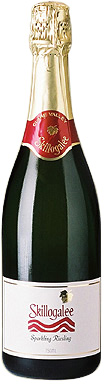
Back into the world of wine, I was recently working at the wine shop, and there was an opened bottle of Skillogalee Sparking Riesling. Apparently, word has spread that this special wine will no longer be available once the stock is all gone. Importers, in other words, won’t be reordering, folks.

Now, if you know anything about Skillogalee wines, you will also know this is sad news. Skillogalee is making some fantastic wines out of the Clare Valley in Australia. Varietals range from Riesling to Shiraz to Liquer Muscat. Sounds like a beautiful range of varietals, right? No lie. I don’t lie.

Handcrafted boutique wines by father and son, this winery was established in the early 1970s and their first wine was released in 1976. After only 2 years, their Riesling won some major awards, putting them on the map. Planted on stony soils with eastern facing slopes, the grapes that Skillogalee produce are hand-tended to and hand picked. Yields are low, and small batches of taken-care-of-wine is what you will taste in every bottle. For more on the history and what “skillogalee” actually means, click here.

So… the tasting note!

Before I spit that tasting note out (ha!), let me tell you that Liberty on Commercial Drive still has a few bottles in stock for about ~$29.00. I believe most of the employees have taken the opportunity to purchase a bottle or two, knowing that they won’t be able to get it anymore.

A clear, pale gold colour with nicely sized bubbles, the Skillogalee Sparking Riesling is youthful in its own right. With a medium intensity bouquet, this wine shines with innumerable characteristics. Lemon juice, floral notes (white flowers, elderflower), sweet vanilla pod, apricot, white peach, and that stunning petrol (minerality) pop from the glass. The added smell of white freezies from childhood made me think of pineapple.

On the palate, the fine bubbles created a non-aggressive, and solidly enjoyable mousse. Dry, high acid, and medium bodied, the stony minerality was complemented by tight citrus and green fruit notes. Some stone fruit came out to play, too. The slightly bready notes were more noticeable on the palate, as this sparkling Riesling was done in the traditional method, and spent 18 months on its lees.

My conclusion: Very good. DNNIFA (for all you wine geeks out there.)

Now…go buy some before it’s all gone, and save yourself from the decisiveness of importers!

Cheers!

Pop quiz: How did Gray Monk Estate Winery get their name?

Read on to find out, wine friends!

Gray Monk Estate Winery is located in the Okanagan Valley of British Columbia. Established in 1972 by George and Trudy Heiss, Gray Monk has grown to be one of the most reliable wineries in BC for consistent quality. Don’t take it from  me — you’ll hear this from wine lovers soon enough.

Photo by Valerie Stride 2012

Photo by Valerie Stride 2012

With over 100 acres of land, Gray Monk makes wines on the spectrum from well known varietals to rare cultivars. I first visited the Estate Winery in May 2012, and fell in love with their wines from the moment I tried their fleet. I particularly enjoyed their Pinot Auxerrois, Riesling, and Merlot. Their Kerner was fantabulous, too. However, their Ehrenfelser holds a very, very special place in my heart.

You won’t believe it UNTIL you try it, but this 12.1% abv wine is chock full of goodies. Mildly off dry, with high acidity and carrying good body, Gray Monk’s 2011 Ehrenfelser is … wait for it … stunning.

I asked Trudy Heiss what inspired the Heiss family to grow and produce Ehrenfelser – a cultivar rarely seen in British Columbia, and turn it into one of their best selling wines? Trudy kindly responded with:

The Ehrenfelser was one of several varieties that came from the Becker Project in the mid-seventies. Since these grape plants were so new back then, we didn’t really know which varieties would be successful. The Ehrenfelser grew very well and the flavour of the finished wine was so big and bold, it made a name for itself. We almost lost them all when we used them for ice-wine production but luckily most of the plants survived.

Fuji apple, citrus (lemon & lime juice), gooseberry, sweet white grapefruit, juicy Bosc pear, floral notes (Rose), and herbaceousness (summer grass) will all make your tastebuds swim. Intensely aromatic and fruit forward, this youthful wine is:
a) a perfect spring sipper
b) a perfect summer sipper
c) a perfect…*pause* I’m sure your inferring skills are kicking in now.

Ahem —

Now, back to our regularly scheduled blog post.

Ehrenfelser is a German varietal that was crossed in 1929. A “crossing” is created by making two vitis vinifera vines have babies. It is said that Riesling and Silvaner are the parents, although there has been debates on Silvaner being the father. A rare grape to see grown anywhere in the world today, this fruity white grape is one you should try (in wine form, of course) before it disappears completely. British Columbia seems to be one of the few places in the world with a number of plantings. Food pairings include onion tarts with goat cheese or lighter meats with fruit glaze (ie. pork chops with pear sauce).

Still interested in how Gray Monk was named? Direct from their website here:

Our name comes from one of the first grape varieties we produced – Pinot Gris.
In Austria and Hungary, this grape is called ‘Grauar Mönch’ hence the translation to ‘Gray Monk’.
The grape has a very distinctive blue-gray colored berry.

Now you know!

Cheers!