The Demystified Vine

Taking the mystery out of wine exploration!

Châteauneuf-du-Pape is both a French commune in the south of France, as well as a label used for a style of wine. This area of France is actually entrenched with papal influence. In the 14th century, Pope Clement V relocated the papacy to the district of Avignon; the area of France where Châteauneuf-du-Pape is located. It is said that although viticulture was not distinguished in this area at the time, the papacy still enjoyed their wine! When Pope John XXII took over rule in the 14th century, he was determined to up the quality of wines available in the area. As a result of the improvement from changes that took place, the wines now made were referred to as “Vin du Pape”, which later took on the label “Châteauneuf du Pape”.

I recently had the opportunity to try the 2009 Domaine des Relagnes Pierre Troupel Châteauneuf du Pape. My friend and fellow WSET colleague Brenda Latta, obtained the bottle from Alain Cloutier, a French wine importer living in Vancouver, BC who owns A & K La Boutique du Vin. Alain is serious about French wines, and he is also passionate about Domaine des Relagnes`s beautiful Châteauneuf du Pape. I spoke to Alain about this specific wine and why this wine stands out from others. His response:

2009 was a great year for Cote du Rhone – very hot, long summer [and] not much rain which gives powerful wine. Why this wine stands out from others? They did a micro-oxidation twice a day that really helped the wine to age well and remove the dusty taste of other Chateaneuf…
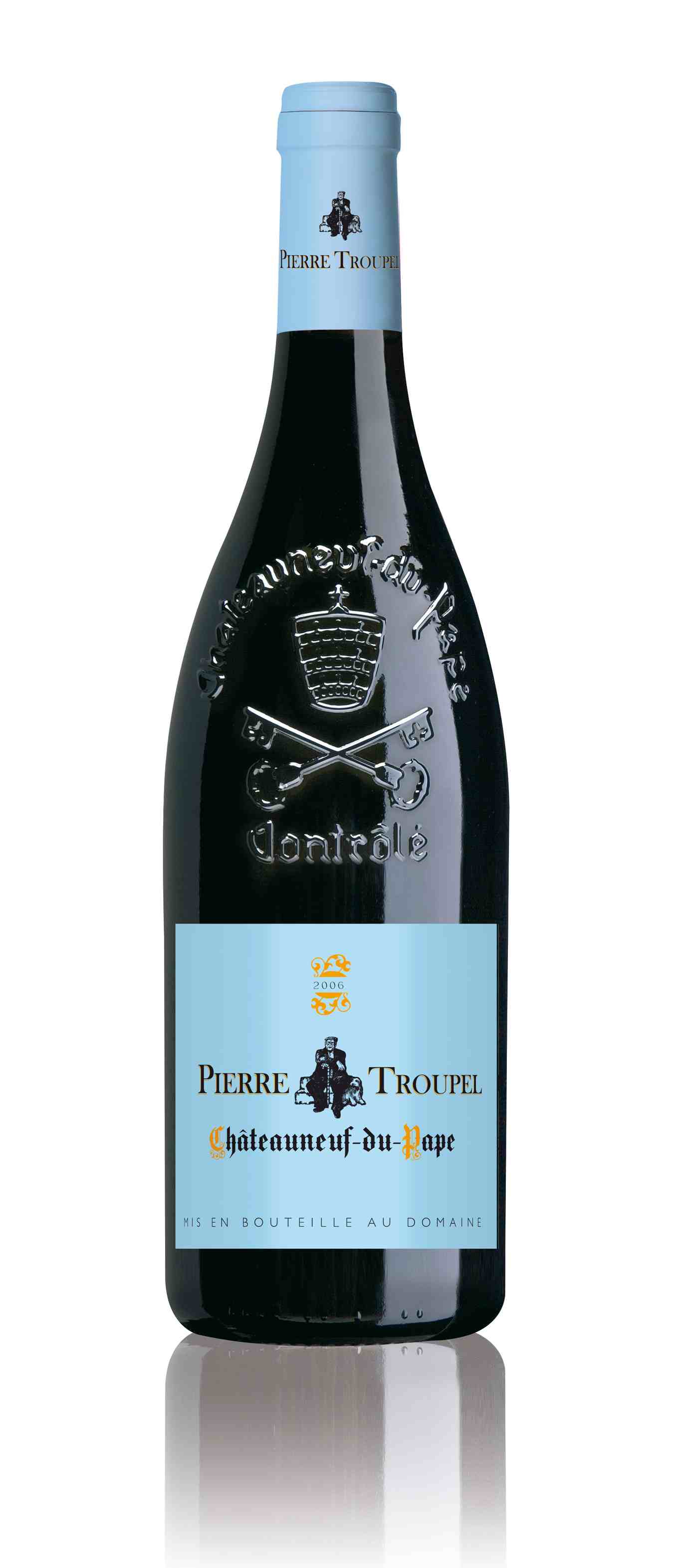
My tasting notes on this 14.5% abv bottle from France stated, “Perfectly integrated beauty.” I suppose that says it all, right? However, I will elaborate…

The bouquet revealed fruity goodness; ripe cherry, blackberry, and rounded plum. The palate tasted of berry juices infused with hints of wood, earthiness, and soft spices. This makes sense, considering this Châteauneuf du Pape is a red blend of GSM, or non-abbreviated: Grenache, Syrah, and Mourvèdre. I found the oaking to be subtle and smooth; it was elegantly stated. My notes said that I thought it could be cellared up to another 3 years, but that it is absolutely drinking at this time. There was a medium finish, and what sticks around are the black pepper nuances. Overall, the tannin structure was put on a soft-medium scale, the acid was at a medium level, and the body was medium as well.

Robert Parker generally states of Châteauneuf du Pape wines:

“As I have written many times in the past, the sweet spot for drinking Châteauneuf du Papes is usually the first 5-6 years after the vintage. Then they seem to go through an adolescent, awkward, and sometimes dormant stage…

(Quote taken from here.)

While I think waiting another 3 years would provide an ideal experience with this Châteauneuf du Pape, I do think that this wine has already developed nicely, and is favourable to drink at this moment. If you have the patience to wait three years for this wine to mature more, it will still be a delicious treat. Parker is definitely right in that the “sweet spot” is around the 5 year mark, and this rule clearly applies to this product. Drink now or wait, please visit the Granville Liquor Store to pick up your bottle of 2009 Domaine des Relagnes Pierre Troupel Châteauneuf du Pape.

As an aside, my final tasting note on this wine said, “So smooth that you might just want to be picked up by this honey.” I guess I liked it or something.

Click here to see how UFOs, yes, have played a part in the history of wines from this area! Happy reading!

Cheers!
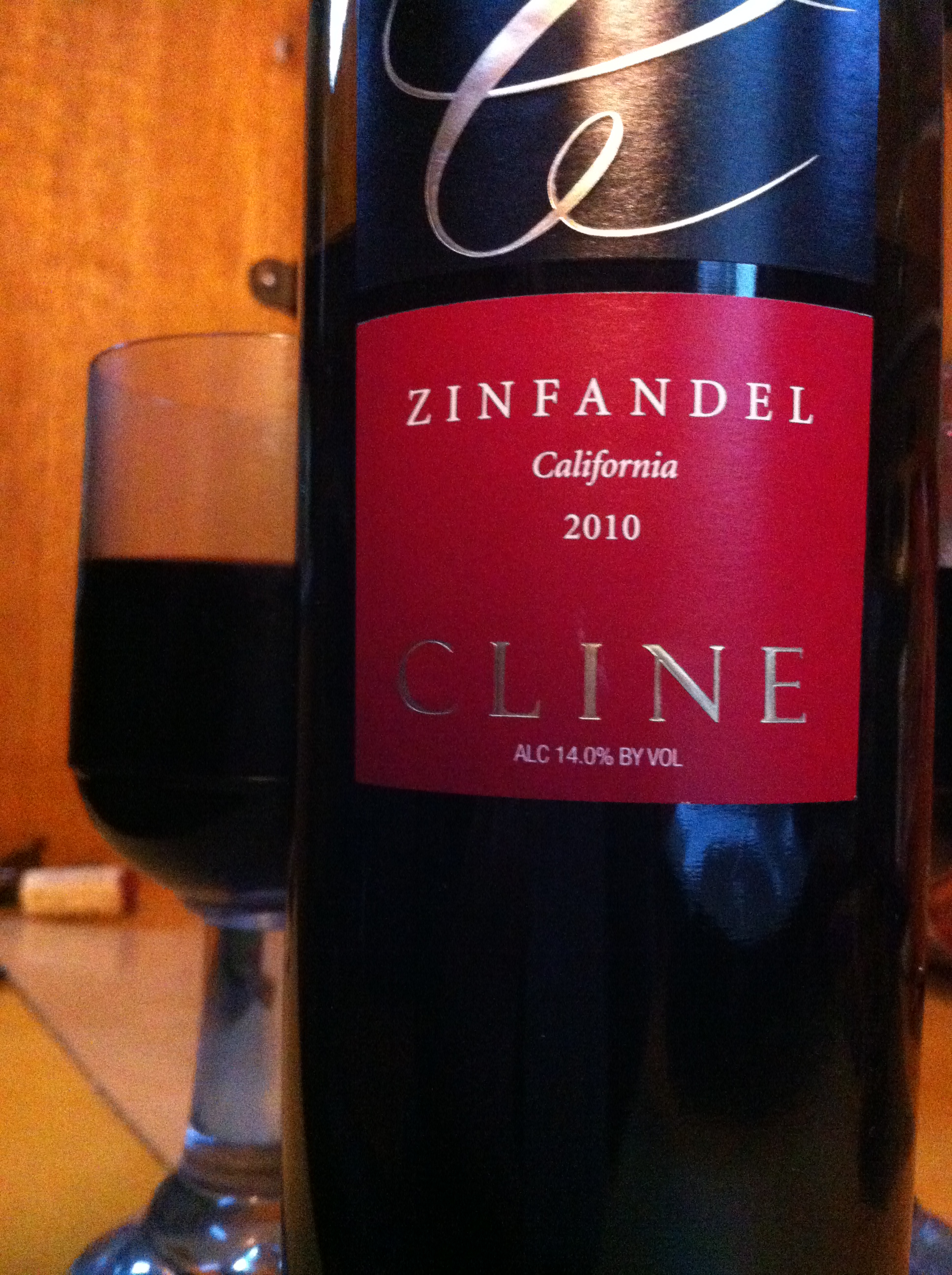
A few weeks ago, my partner picked up a bottle of 2010 Cline Zinfandel for us to have with our Carne Asada while we were away sailing the San Juan Islands out of Bellingham Bay in Washington. Prior to this sailing trip, actually going out and buying a bottle of Zinfandel was not on the priority list. For the last year or so, I have been focused on buying Pinot Noir, Gewurztraminer, and Merlot wines. I have found a wide range of styles with these varietals, and essentially, I have had a lot of fun tasting the spectrums of each.

2010 Cline Zinfandel

Cline’s 2010 Zin was interestingly bold with its fruit content. From Sonoma County in California, this product was bottled at 14% abv, with medium tannins, high acid, and was more toward the medium+ body range. It’s beautiful clear medium purple colour was exceptionally gorgeous, and I spent a bit of time examining the rim of this wine. The bouquet was of medium intensity and clean, and the notes of black fruits, namely, black cherry, blackberry, and concord grape were overt and bright. The bonus: the light expressions of mocha and vanilla that were left in the nostrils post-sniff. The palate was also dark fruit based; blackcurrant, cassis, hints of smoked wood, and the most intense blackberry perfume were all present in the glass. The finish was of medium length and really brought out the taste of fresh grape.

Cline created this Zin with a lot of care. Their website describes the production of this wine:

To create this wine, we begin by entirely de-stemming and only lightly crushing the grapes to preserve fruit and limit harsh tannin extraction. Then, a moderately warm fermentation is conducted in closed stainless steel tanks using specific wine yeast. Wine is pressed once desired tannin level is achieved, and then free run and press wine is combined. By racking the wine two or even three times before settling down to wood for eight months, we achieve early elegance without sacrificing bright fruit. Thirty-percent new French oak is used, which contributes a delicate vanilla and nutty character.

I think that their attention to tannin structure in a Zinfandel is of utmost importance. Zinfandels are, more times than not, big hot reds — especially coming out of California. Having a tannin structure that eats your mouth out is not attractive nor pleasant. You folks know what I’m talking about. Try sucking on a black teabag and then you’ll know what I mean. Not pleasant, right? Exaaaactly. They did a great job with creating a little bit of tannin gusto, but it is not overdone.

For those who don’t already know, Zinfandel is also known as Primitivo (from Puglia, Italy) and Crljenak Kaštelanski (from Croatia). Zinfandel was introduced to North America (U.S.A.) in the mid-1900s. How the name “Zinfandel” came about (as opposed to keeping Primitivo, for example) is currently unknown. California is currently a top-producing region in the world for Zinfandel. Certain areas within the state are better at producing Zinfandel, which is to be expected since terroir has a huge influence on how varietals grow and produce flavour profiles. If you’re looking for a good, cheap Zinfandel to go with your Carne Asada or spaghetti and meatballs, try Cline’s. Otherwise, try to look for Zins from Lodi, Mendocino County, or Amador.

Available at BC Liquor Stores for $18.99 or at Trader Joe’s in Washington for $12.99 (dang taxes).

Cheers!

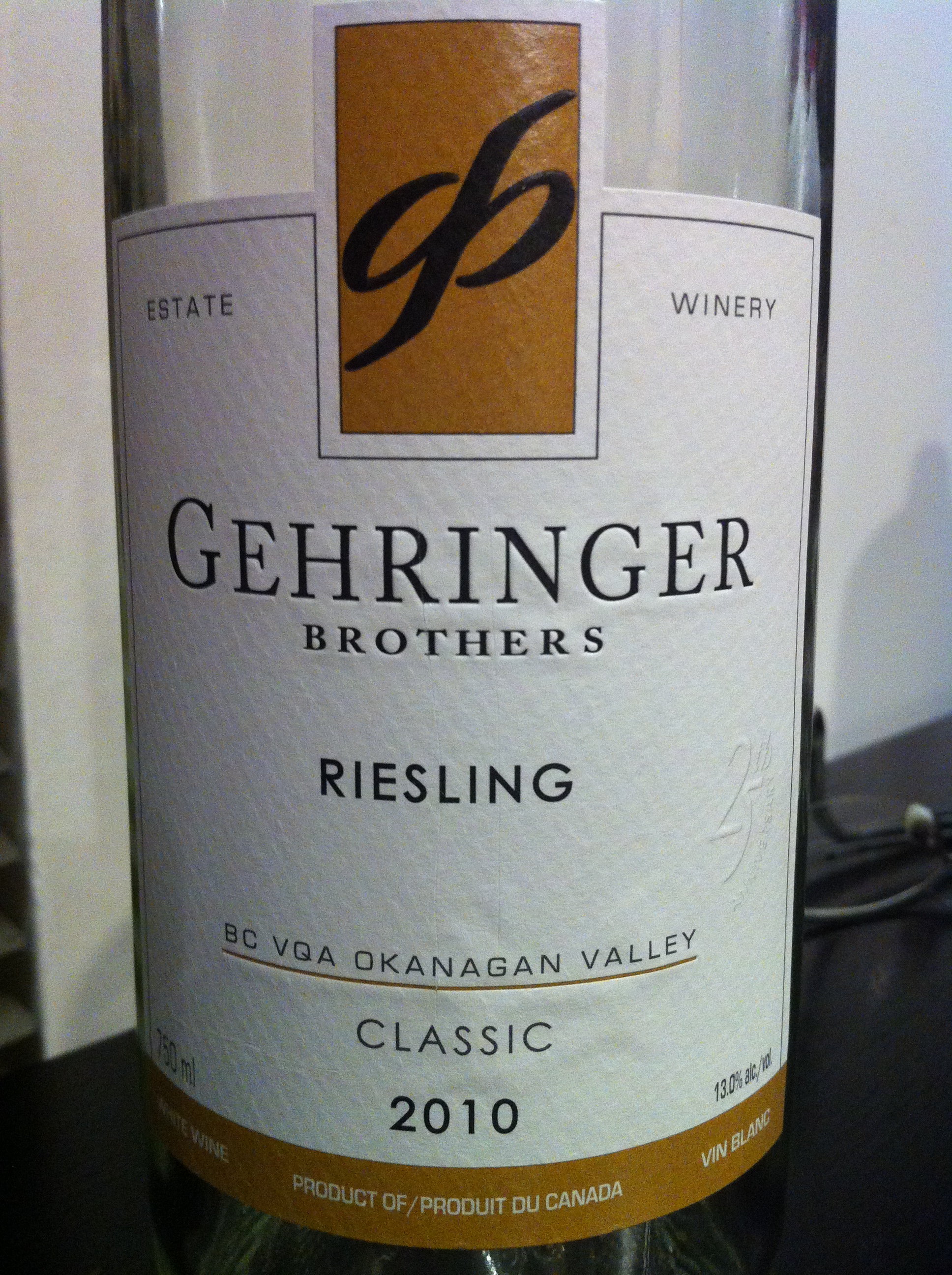
Selling for $14.99 at BC Liquor Stores, and perfectly paired with seared Calvados-infused pork chops, roasted rosemary and garlic potatoes, and spicy cashew green beans, this Oliver-based Riesling was a pretty big hit at dinner on September 22, 2012. Every single guest agreed that this off dry Riesling from the Okanagan was one that they would buy again. So, what made it so special?

2010 Gehringer Bros. Riesling

Gehrginer Bros. 2010 Riesling is representative of New World Riesling goodness. It was a genial wine – one that would not offend by way of that petrol-likeness that many Rieslings can contain. Now, I personally adore the petrol essences that Rieslings carry, but this wine did an excellent job at managing fruit, minerality, and flower characteristics, while keeping its crispness. This wine was not flabby, flaccid, or flimsy in any way; it was fabulous, fantastic, and first-class.

How can I hone-in on how this wine’s fruit, minerality, and floweriness were melded together so intricately? Well, I suppose I just did, but anyway…

Brightly clear and pale lemon green in colour, this Riesling’s bouquet was of surprisingly light intensity, as it represented a most interesting mix of citrus (lemon, lime), pear, Granny Smith Apple, unripened fuzzy peach, violet nuances, and the most delicately (and complimentary) petrol notes. The interface on the palate was just slightly different: pleasing tart kiwi and white stone, with a citrus backbone. The acidity was altogether favourable on the palate, and its light+ body was surprisingly engaging.

Interestingly, the Riesling varietal is widely planted around the globe, however, it lost its “umph” as a wine that people desired. Many critics say that it will never resume its former chic status. I am one of the few hopeful wine consumers, who will advocate Riesling as one of the most underrated wines in the world. It is not only being experimented with (take, for example, Karma Vineyards’ “Griesling” that I reviewed earlier – a mix of Gewurztraminer and Riesling), but it is being made into wonderfully-balanced wines like this 2010 Gehringer Brothers product.  We can’t forget, however, that British Columbia as a wine growing region is very up and coming. I say, let’s set the stage for Riesling to come back into fashion — just like those tight skinnies that are haunting us from the 80s.

For those who are interested, Gehringer Brothers Estate Winery was formed in the early 1980s. They officially built their winery and produced their first vintage in 1985. After Walter and Gordon Gehringer spent years in Europe studying winemaking practices, they returned to BC, and, well, the rest is history! Their 2010 Riesling won the following wine awards:

Gold – NorthWest Wine Summit
Double Gold – Indy International Wine Competition
Gold 92 Pts – Los Angeles International Wine Competition
Silver – All Canadian Wine Championships

If you enjoy this wine, you will also adore Calliope’s Rieslings; they have a similar qualities and are just as friendly to drink. Wine for thought…

Cheers!

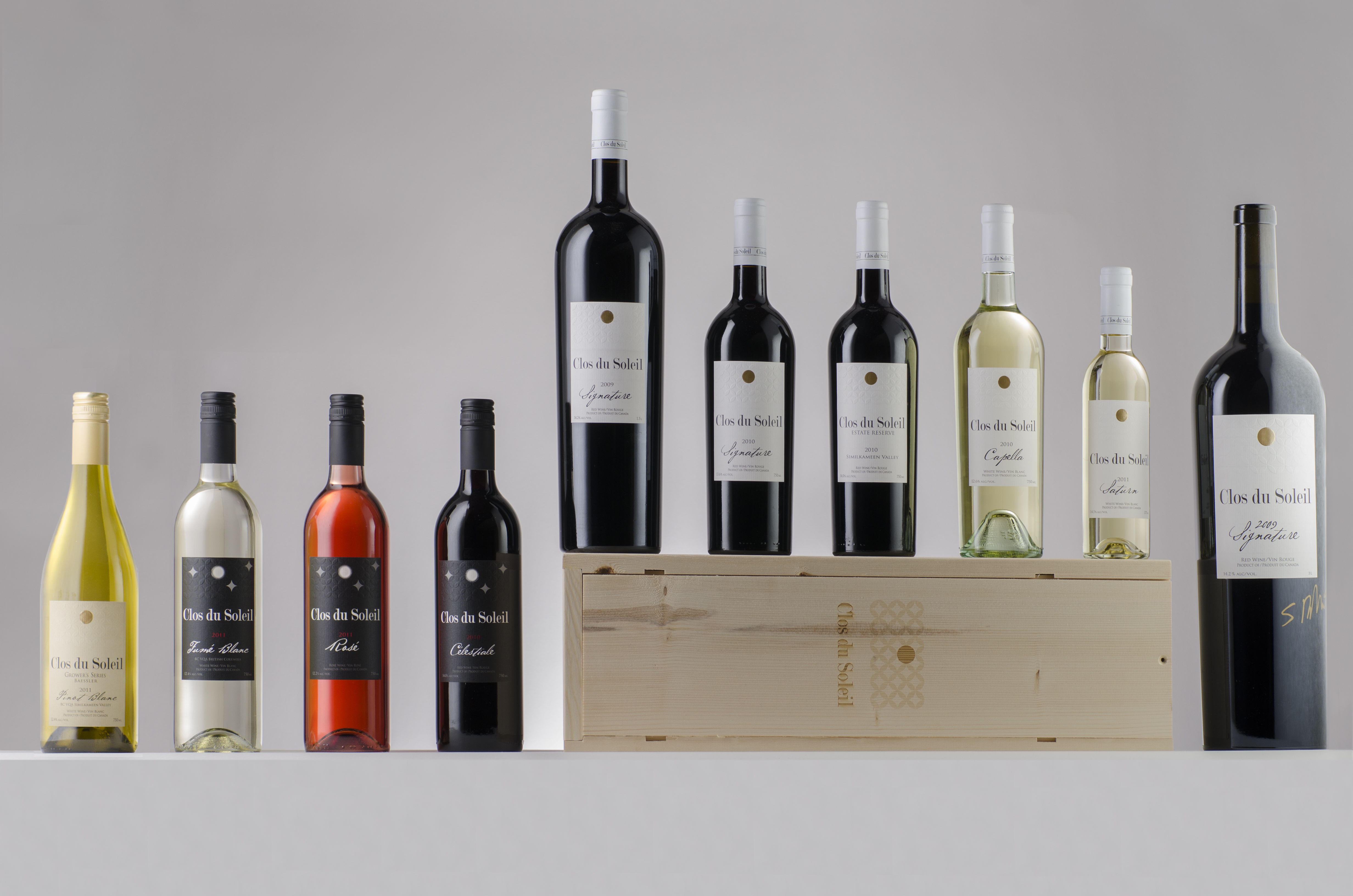
A little bird in the vineyard told me that Clos du Soleil is having their very first “Annual Vertical Tasting” event on Sunday October 7th, 2012 between the hours of 1-3pm at their winery.  The folks at Clos du Soleil, a biodynamic winery in Keremeos, are thrilled to be showcasing and sharing their premium artisan wines.  Rhys Pender, one of four Masters of Wine in Canada, will be the official leader of the vertical tasting.

One of the wines to be vertically sampled at this animated event is the ever-desired Signature blend from vintages 2006, 2007, 2008, 2009, and 2010.  Highly acclaimed and recognized, Signature has received many acclamations over the years.  John Schreiner has scored certain vintages at 93 points, and in 2008, Signature won Silver and Bronze in Canadian and International wine competitions. This can only mean one thing: those doing the tasting are in for a real delight!  Both Ann Sperling and vineyard manager, Felix Boulais, have a passion for sustainable viticulture using both organic and biodynamic practices.

In addition to the Signature, participants will be vertically tasting Clos du Soleil’s Capella from vintages 2006, 2007, 2008, 2009, and 2010. This French influenced blend hones in on the kind of crispness and vibrancy that makes wineries win awards. Yes, that’s right. Their Capella has also been recognized by Anthony Gismondi and John Schreiner, among others, as being a genuine competitor for Bordeaux-style whites on the world stage. It has been bestowed 90 points from Schreiner over multiple vintages, and in 2011, Capella won the Bronze medal at the Wine Access Canadian Wine Awards for the 2009 vintage.

The First Annual Vertical Tasting will be providing light refreshments and food during the tasting journey. The Clos du Soleil team will only be inviting 10-12 VIP guests, mainly wine writers, and loyal fans, in addition to a few sommeliers, and faithful Clos du Soleil supporters.  Two very special seats will be reserved for the winner of a little contest they are running from their website. Clos du Soleil has decided to open up 8 seats for Les Amis, loyal fans and customers, as well as Wine Club members.  Unfortunately, this event will not be open to the general public this year; it will be through special invite only.  Cross your fingers, folks, that next year will be different!

How did this all come together?  In 2005, a small group of professional, international business people, with a passion for wine, food and travel, fell in love with the Similkameen Valley and decided to become grape-growers and winemakers.  The closely connected team of Spencer Massie and Bonnie Henry, Les LeQuelenec and Sue Lee, Peter and Andria Lee, and Gustav Kramer, acquired a four-hectare (10-acre) orchard on the Similkameen Valley’s Upper Bench Road on the winter solstice of that year.  With a love of everything classic French and family roots going back to Normandy and South Africa’s Cape, it was easy for the partners to get excited about a Bordeaux style wine.

Spencer Massie has always wanted to work on a project such as this one. He wants to share with the winery’s friends, Les Amis, how each vintage is tasting and developing, as they continue to evolve with age.  Rhys Pender will kindly be composing vertical tasting notes for each vintage. This information will be shared with Les Amis following the event in hopes that it will guide Clos du Soleil wine lovers when to open each vintage at the perfect time. Make sure you join Les Amis to take advantage of this sweet opportunity!

Clos du Soleil is a small artisan winery and estate vineyard in the Similkameen Valley Upper Bench with a focus on super-premium quality wines in a Bordeaux style – where Old World elegance meets with New World edge!

For more information, please check out their website at https://www.closdusoleil.ca/. Better still, check out their premium wines at the winery!

Clos du Soleil Winery, 2568 Upper Bench Road in Keremeos.

Cheers!

Looking for a neat little getaway (that is relatively close to Vancouver) for some wine tasting? I recommend heading down to Woodinville Wine Country in Washington State. There are truly some very interesting wines coming out of Amavi Cellars, J. Bookwalter Wines, Jannuik Winery (their Merlot is wonderful!), and of course, Matthews Estate. I have yet to exhaust my Woodinville winery tour, so if anyone is interested in going…

A boutique winery called Matthews Estate lies among the various wineries in Woodinville. Their focus is on Bordeaux styles, and they also do some single-varietal wines as well. Their website states that:

The winery and winemaker, Aryn Morell, believe that there is a deep and tangible link between the vines, hills, winegrowers and winemakers, and carries this proof of affinity into every aspect of winemaking: from the vineyard to the cellar, from the vine to the wine bottle.

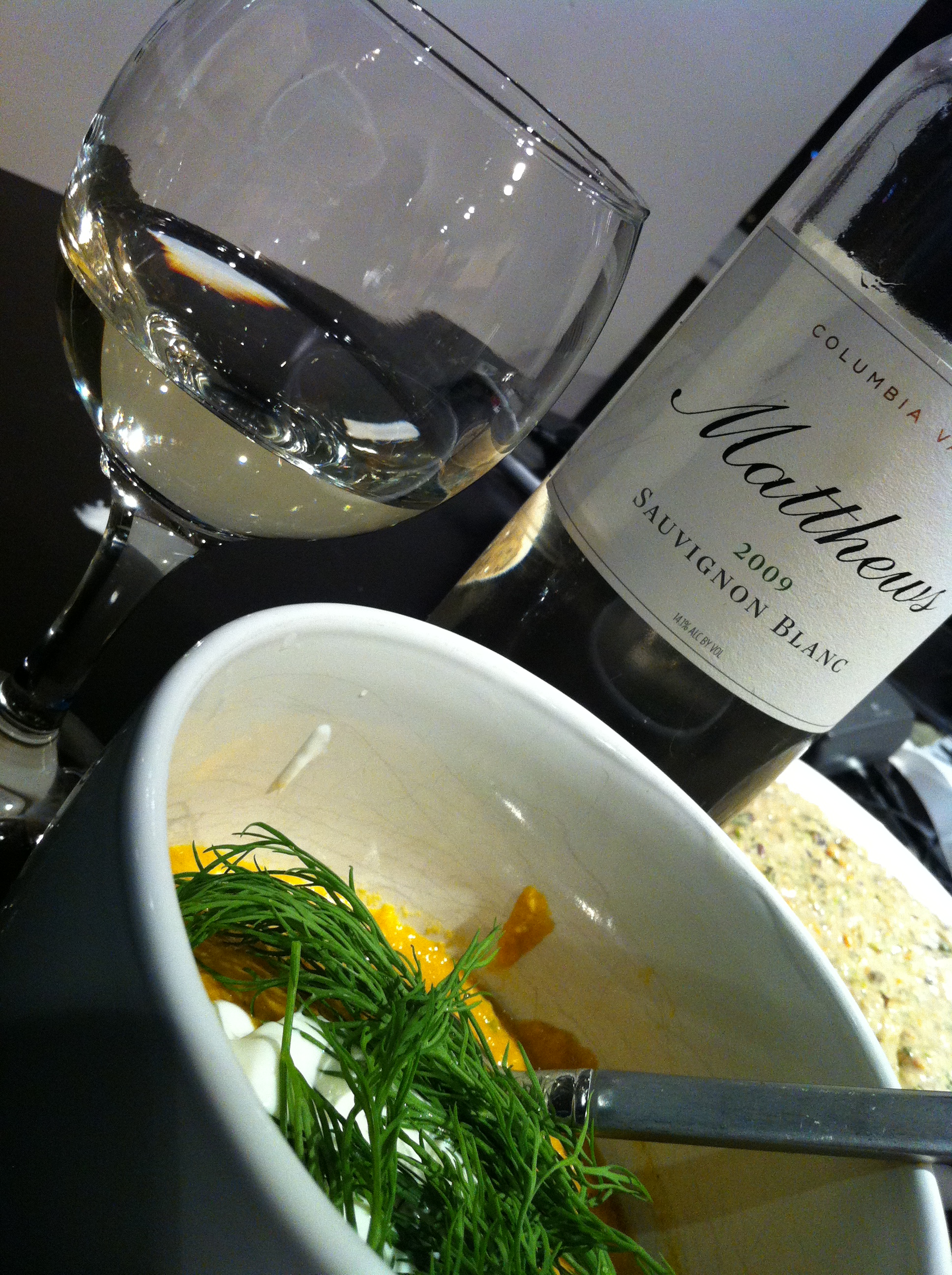
Excellent. I like it when the winemaker is thoughtfully inclusive about who and what is involved in making a bottle of wine. Although I was not entirely impressed with their Claret or Syrah, I quite enjoyed their Sauvignon Blanc 2009. Matthews Estate likes to model their Sauvignon Blanc on the Sancerre style. The Sancerre wines that come out of the Loire Valley in France are said to be quite expressive of the Sauvignon Blanc grapes, as well as the terroir that the grapes are grown in. The key is to be able to express the Sauvignon Blanc varietal with little to no adjustments during the winemaking. Many winemakers, however, are now starting to experiment with some minor oaking in order to change the style a bit. This specific vintage, however, was fermented in concrete eggs, stainless steel, and a very small amount was put into barrels. Matthews sourced their 2009 SB grapes from Columbia Valley in southeast Washington. Columbia Valley is quickly gaining a positive reputation in the Northwest and beyond, for being a quality varietal region. This specific vintage won double gold at the Seattle Wine awards in June 2011.

Matthews Estate Sauvignon Blanc 2009 paired with homemade carrot-ginger soup topped with sour cream and dill.

My humble opinion on Matthews Estate Sauvignon Blanc 2009, is that if you are interested in getting to know what this varietal is like, this is a good starter. I am a fan of those rich and vibrant New Zealand Sauvignon Blancs that scream at your palate, but Matthews Estate does an honourable job with providing consumers with a pleasantly palatable wine. The wine was clear and pale lemon. The bouquet was clean, and had light intensity on the nose. It also shone with notes of citrus (lemon juice), dried summer grass, and the faintest hint of beautifully tart green apple. The palate revealed a nice, light+ bodied wine that was dry, high acid, and was overall balanced. Flavour profiles include a citrus-herbaceous infusion with delicate white stone essences. I really enjoyed the minerality in this white wine, because the finish developed a white chalk-like character that complimented the grassiness quite well.

I thought this wine was quite good, and it would be the kind of Sauvignon Blanc that represents Sauvignon Blancs well. Watch out for the alcohol punch though, kids! At 14.1% abv, this wine will have you spinning. It is definitely an easy-sipper. It paired nicely with the carrot-ginger soup (topped with sour cream and dill) that I shared with my partner for dinner one evening. Make sure to consume the entire contents of this bottle when you open it, as it doesn’t last more than one day even with the Vacu Vin seal.

If you would like to know more about Matthews Estate click here.

Cheers!