The Demystified Vine

Taking the mystery out of wine exploration!

I am inclined to begin this post by mentioning that the concept of karma is widely known to be a cause and effect law. So, with that as a reminder, I will now continue my blogging.

2010 Karma Vineyards Griesling, Lake Chelan, WA

Background: I was on summer vacation in the Lake Chelan area of Washington in July 2012. After disembarking from the ferry, a few of us decided that we would like to visit a few wineries in the area before heading back to the border. Afterall, we needed to have some wine to bring back with us to Canada, right? (It’s cheaper in the state of Washington due to tax laws.) Our first stop, Karma Vineyards. We ate a lovely lunch at their 18 Brix Restaurant, and each ordered a “fleet tasting” of their available wines. All of their wines were lovely, but while paying for our meal at the register, I noticed a new wine that I had not tasted in my fleet. Yes, folks, the blue bottle stood proud and pretty on their countertop, my eyes drawn to it like a moth to a flame. I had a feeling that it was going to be a good day.

The conversation with the waitress went “something” like this:

Me: “What is that wine in the blue bottle?”
Waitress: “That’s our new Griesling. It was just released yesterday. Would you like to try…” [cut off]
Me: “Umm, yes!!”
Waitress: “We don’t even have any tasting notes yet for it.”
Me: “Perfect. I can help you with that – I’ve taken my WSET courses.”

The rest is history my friends. It was like an orgasm in a glass.

So, I decided to open it at a tasting I had in my home a few weeks ago. Here is what my guests had to say about it after I asked them to fill in the blanks to this question: If this wine was _____, I’d _____.

Guest 1: If this wine was a woman, I’d be in love.
Guest 2: If this wine was like dancing, I’d wanna dance the night away.
Guest 3: If this wine was my house, I’d never leave.
Guest 4: If this wine was water, I’d be surfing it.
Guest 5: If this wine was snow, I’d be melting it.

Other words my guests described this wine as being: indulgent, full of life, and nostalgic.

Now to the nitty-gritty. An honourable blend of Gewürztraminer and Riesling, this off dry and medium+ bodied wine was boasting of tropical fruit and a hint of butter. It was fascinatingly Riesling on the bouquet and more Gewürztraminer on the palate. The nose was floral and diesel-like with a subtle whiff of oak. In the mouth, it was coconut, mango, melon, fuzzy peach, and a hint of wood. I spoke to Craig Mitrakul, the winemaker at Karma Vineyards, and he provided me with this information about the Griesling:

Thanks for your visit to our tasting room and for your nice comments.  Our estate vineyards consist mostly of traditional sparkling wine varietals.  However, we have a little bit of Gewurztraminer and a Riesling planted too.  This wine was not bottle before harvest 2011 because it wasn’t quite ready.  Both wines as stand alone varietals were good, but missing something.  In the beginning of 2012, we revisited the wines and did blending trials.  Low and behold, we liked the wines blended together.  They complemented each other well with improved fruit aromas and flavors as well as balanced sweetness.  The tasting room was also looking for a wine with a little bit of sweetness and the Griesling fit the request.

Craig, it doesn’t matter that both varietals were good as stand alones at this point. Your crafted Griesling is probably one of the most interesting wines I have ever tasted. Granted I am not as experienced as others (yet), I can conclude that this Griesling is a living force unto itself. My tasting guests, as stated above, will agree with me.

Food pairings? Don’t you dare.

Gewürztraminer growing in the fields of Karma Vineyards, July 2012

To my lovely readers, if you’re in the Lake Chelan area of Washington and you you don’t stop in to buy a bottle of this, you will regret it. Heck, drive down just to buy a bottle, and then invite me over!

Cheers!
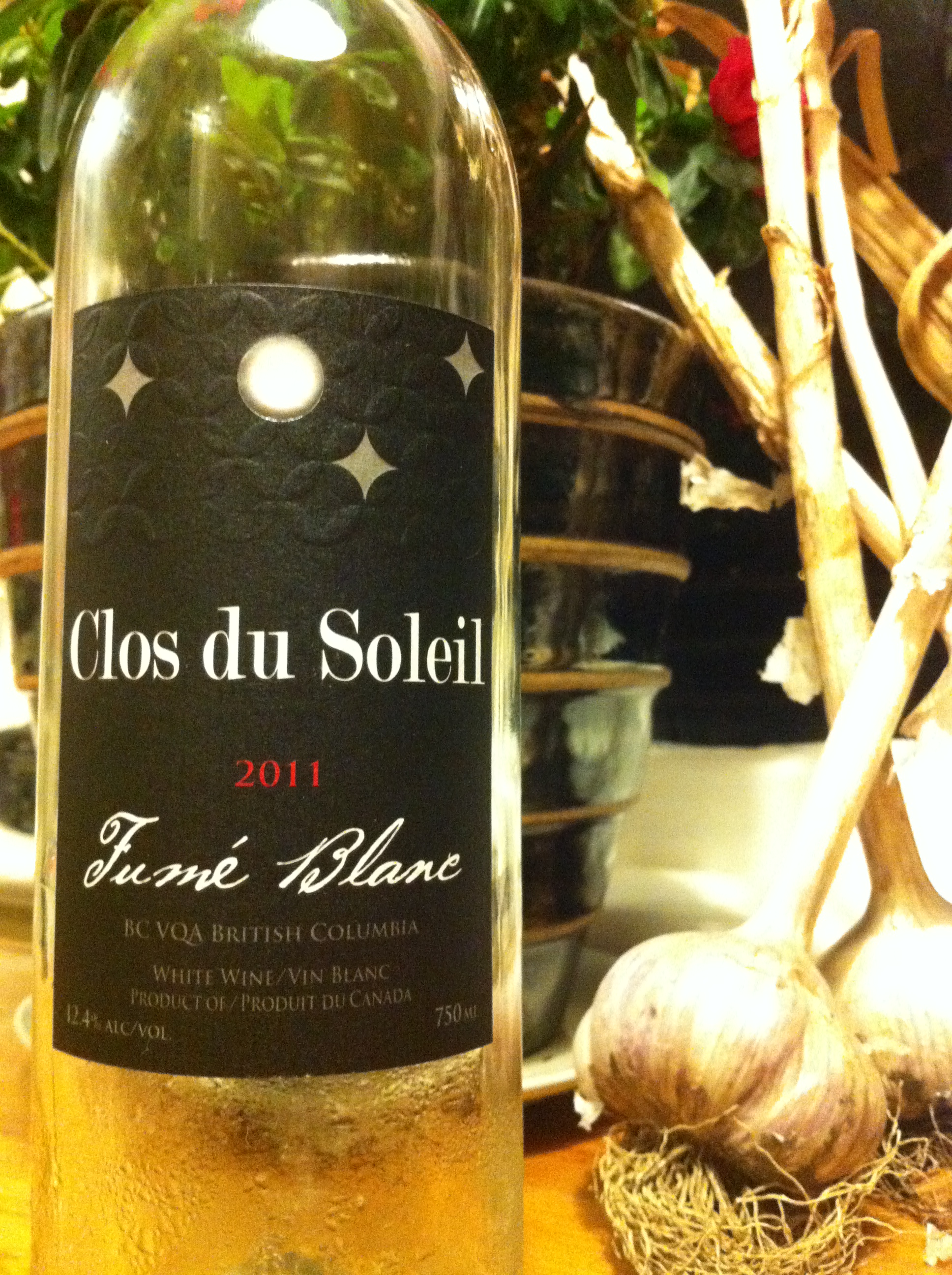
Well, hello there, Clos du Soleil Fumé Blanc. Nice to drink you. –Me

Let’s take a little poll here, shall we? You can answer yes or no or maybe. However, you can only say maybe if you are leaning towards a no, and then go out and try this wine. I make these tough rules because I’m sure you’ll change your mind after trying this artisan beverage.

Question: Can wine be sexy?

You think about it. I’m going to put my own opinion out there and say definitely. That wasn’t an option, you say? Oh it is; “definitely” is a synonym for “yes.”

This was sexy at first sip. I should really say “sexy at first smell,” because I always smell the wine before I taste it, but moving on… This is one agreeable white blend, folks. Clos du Soleil’s Fumé Blanc is an exceptional mix of the Sauvignon Blanc and Semillon varietals, 98% and 2% respectively.

Characteristics of the Sauvignon Blanc varietal include green herbaceous qualities and some types of fruit depending on where the varietal was grown. The style of the Semillon varietal leans toward citrus-based flavors and smells, and it is very susceptible to noble rot, which is why it is regularly used for dessert wines. You might be wondering why there is only a 2% addition of Semillon in this blended wine. According to Jim Ainsworth in White Wine Guide, Semillon “is the ‘fat one’ of the Laurel and Hardy duo, lending weight to the partnership and, by dint of its ability to age gracefully, prevent[s] many a thin Sauvignon Blanc from falling embarrassingly flat on its face before the end of the first reel” (123). Don’t think Sauvignon Blanc a weakling, though, like Ainsworth does. This varietal is easily a top-ten pick amongst wine lovers, and Sauvignon Blanc is made into phenomenal, award-winning wines. Oh, and Clos du Soleil knows all about award-winning wines. Just check out their website for their award listing. Don’t take my word for it. These guys and gals are getting 90+ points on their wines!

I spoke with Spencer Massie, one of the owners of Clos du Soleil, and asked him, “Why does the Fumé Blanc help contribute to the overall sophistication of Clos du Soleil’s wines?” His response:

With the exception of the Grower’s Series, our project with a select handful of our neighbours in the Similkameen, Clos du Soleil is focused strictly on Bordeaux varietals – and we draw our inspiration for our Fumé Blanc from France. It’s quite different than the California style – in fact let’s call it “BC Fumé Blanc” – and ours is a different expression of the same grapes used in Capella – our classic Bordeaux blanc style top-tier white – with barrel fermentation adding a roundness to the wine with just a hint of smokiness.

As an everyday wine, it allows people who are just discovering Clos du Soleil to try something at the entry level – and it is an exceptional value wine, in my honest opinion.

Funny – but when I’m doing tastings and people ask me for a Chardonnay – I always let them try the Fumé Blanc – and they love it because of that roundness normally associated with that varietal.

What do I love about the Fumé Blanc? You got it! It’s sexy. Sophisticated sexy, with a beautiful clear, lemon green hue. On the nose, this attractive white boasted of gooseberry, lemon-lime, peach, pear, and white grapefruit. What I loved about every sip was the light wafts of vanilla that came off this new French oak fermented wine. In the mouth, a more herbaceous tone revealed itself, with a lovely citrus backbone. The wine was perfectly oaked, and was not overpowering the delicate, and yet complex, flavour profile of the palate. This is probably due to the fact that the wine was fermented in puncheons; a wine cask made to hold approximately 320 litres of liquid. The overall exposure of wine touching oak was absolutely balanced. The finish was surprisingly long, and I wasn’t complaining. For a white, the acidity was crisp and clean, and not tart like many new world whites. This wine is definitely in my good books. I tend to enjoy drinking whites, albeit not as much as reds. That being said, this white was unpredictably multifaceted on both the bouquet and the palate. I am a seriously happy gal.

Clos du Soleil is a proud supporter of organic farming practices, and as a result, you can be confident that the folks in this Similkameen Valley winery will continue to provide top-notch wines for years to come.

Cheers!

For more information on Clos du Soleil, their artisan wines, and where to find them, please click here. This wine is available at select BC Liquor Stores for $19.90.

I’m going to make things easy here, so listen up. Merlot is still cool, and it always has been. Don’t listen to what they say in bad movies like Sideways. Merlot is not a chick wine (What is that anyway?), and it’s not a wine for those who can’t take the heat in the kitchen. Moreover, if you’re looking for that soul mate Merlot, The Vibrant Vine is where you’re going to find a long lasting friendship.

Photo Copyright Valerie Stride 2012

Photo Copyright Valerie Stride 2012

Before I give my splash on this wine, let me allow Ted Tanguay, one of the The Vibrant Vine’s awesome employees, to share his reflection on the 2009 Merlot: “My personal thoughts on this wine? This is a wine that I am proud to present to customers with a nose of ripe black fruit (cherries, plums, currents, blackberries, and anise) that carries through to the palate with a lovely smoke and pepper that is finished off with soft round tannins.” Quoted and delivered. You heard it here, folks!

So, shall I disagree with Ted? I can’t. He hit the nail on the head. However, since I’m writing a blog…

This “Fab Five” Kelowna-based vineyard out of the Okanagan Valley sure knows how to make a Merlot. For a wine only 3 years old, this deep ruby bottle of exquisiteness packs a good fruit punch with amazingly graceful tannins. (No, not fruit punch, like the drink!) You wouldn’t think it was storing 14.6% abv, nor would you expect the quality it had for only $25.00 CAD. This is a steal. I have been talking about this wine since I bought it at the winery in late May, and as my partner eagerly awaited me to uncork this bottle last night at my wine tasting, I will bashfully admit I knew it would wow the guests.

Black cherries, blackberries, black pepper, and black chocolate (Okay, it was dark chocolate…run with it) were all eagerly jumping out of the glass. I put the nose intensity at medium+, but then again, I was inhaling this bouquet for a while. The palate also brimmed with black fruits, and there was this romantic dance of cinnamon and toasted oak that lingered on long after the sip was gone. (Where is that poetry coming from?) In other words, this wine had a long length finish, and the well-integrated oak made it just so easy to like. I believe this 2009 Merlot is a product that could be cellared for up to another 2 years, but why wait? Yes, valid question. You’ll see.

Oh, and while I am at it: I won’t mention that The Vibrant Vine’s packaging is fun, animated, and colorfully eye-catching. The 2009 Merlot bottle is super extraordinary since its label is painted on with, wait for it… glow in the dark goodness. Who says drinking wine in the dark can’t be fun? In any case, The Vibrant Vine may use flashy packaging, but their wine is serious sophistication.

You can find The Vibrant Vine’s products in Vancouver here.

Cheers!

It’s a hot summer night – what’s a girl to sip with her friends on the porch? A 2010 Calliope Riesling you say? I’m waaaay ahead of you.

Working with housewine.ca at the Harmony Arts Festival in West Vancouver.

After working hard in the wine garden with the housewine.ca ladies in West Vancouver at a festival, I couldn’t help but want to have a bit of celebration myself! I drove to Kitsilano Wine Cellars (see Resources for further info) and perused the vastly packed shelves of bottles filled with tasty goodness. I knew I wanted a white wine. I knew I wanted something refreshing. I knew that I knew nothing about Calliope (pronounced ka-LIE-ohpee) wines.

So, I bought a bottle.

Perfectly chilled, this is a commendable piece of work. Let me tell you! Reading the respective website, I like the mission that the Wyse Family is on: to experiment with varietals in uncharacteristic ways. Exploration can be fun, and the exploration they took with this 2010 Riesling was fruitful (Ha!) in my brown eyes! What did they do that was different? Read on my friends…

My personal exploration of this product revealed that the clear, lemon green liquid, was just a bit different than the average Riesling I would normally drink. I couldn’t place my finger on it right away, but as I sipped it more, I started to think that they had followed a light lees protocol. “On lees” (or sur lie in French), means that winemakers will leave the wine resting with the inactive yeast cells in the barrel before bottling. Typically, they will stir the dead yeast cells in the wine on a fairly regular schedule for a certain amount of time. Doing so allows biscuit and yeast essences to permeate the flavors of the wine, making it more complex and striking on the palate. Later, I looked up their tasting notes. Low and behold, I learned that they had stirred the lees every fortnight! That being said, it is important to know that Riesling is not a varietal that typically benefits from either oak aging or extended lees contact. Way to be different!

Furthermore, the bouquet revealed lemon rind, white chalk, floral essences, and a bit of that diesel smell that I love to discover in a good Riesling. The palate held citrus notes as well, such as white grapefruit, in addition to pear, tart green apple, and fuzzy Okanagan peach. At 13% abv and well balanced, I was quite amused at how this dry, light+ bodied wine packed a good punch. Such a refreshing wine for, well, anytime!

Photo Copyright Valerie Stride 2012

Beware: only 190 cases were produced. When this stuff is gone, it is really gone. The early bird gets the worm. You snooze you lose. You get my point.

Random fact time: The name “Calliope” comes from the Greek Muse of Eloquence. Interestingly, I also learned that the smallest hummingbirds in British Columbia hold the same beautiful handle. Great name for a great wine; I like it when things get artistic!

Cheers!

For more information, visit Calliope Wines and have a look at their tasting notes for the 2010 Riesling.

More on the Riesling varietal here.

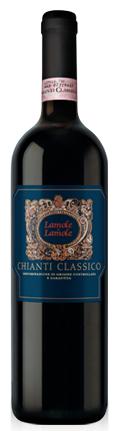
The salmon and chard pasta was steaming on the plates for my guests, and a vividly green side salad was ready to be dug into. The bottle of Lamole di Lamole Chianti was uncorked, and poured into stemless glasses. At 15.5% alcohol by volume, I was expecting a heat punch to the tastebuds. However, what I discovered was beauty in its prime. This Chianti was ready to consume, and how we consumed it!

From a designated area in Tuscany, this Chianti has the DOCG status, which stands for Denominazione di Origine Controllata e Garantita. It’s the Italian way of saying that the winemaker must guarantee the origin of the grapes and the stylistic authenticity of the wine. Quality is not included in these stipulations. That being said, whoever believes that you can’t find quality wine at a decent price is mistaken. This gorgeous ruby red liquid (purchased in Washington State for approximately $12.00 US) hit the spot. How can you resist the spot?

Now, for a history lesson. Pencils ready? Lamole, the town in Italy where this Chianti product came from, is actually named Pile e Lamole, just so we’re clear. The winery, Lamole, is one of the oldest traditional estates in the Classico region of Chianti. As if it doesn’t get better than that, Lamole di Lamole (as the winery is commonly referred to nowadays) has been around the block.  According to Rosemary George, a wine enthusiast who wrote Treading Grapes, Lamole was once an, “old barrel cellar, […] [and] once the storerooms of the castle of Lamole, for the village had been a Florentine lookout post in the fourteenth century” (56). Unfortunately, I was not aware of this piece of information when I was enjoying the infectious fruitiness in the bottle. If I had of known this tidbit of informazione, I probably would have made my meal a little bit more medieval to suit the historical context of the winery. That’s right, little would they have known, my guests would have eaten with their hands! Just kidding…maybe. <grin> I can only remember the clean, perfume-like essences of cherry, raspberry, and red licorice. The charming cherry and black peppery dance in my mouth was well-balanced enough to make me forget my dinner. Who needed salmon and chard over pasta when I had a full-bodied red in front of me? If you can get your hands on a bottle, I recommend exploring this wonderful Sangiovese creation by Lamole di Lamole.

Cheers!

Feel like some after blog lessons? Click here to find out more about Sangiovese, the main varietal of Chianti wine.