The Demystified Vine

Taking the mystery out of wine exploration!

If you like white wines that are fruit forward, I recommend you try Kettle Valley Winery’s 2010 Gewürztraminer. If you don’t like fruit in your face, well, you’re out of luck with this one. I decided to purchase this bottle because I wanted to contribute a little “Gewurz” to the stomachs and hearts of the friends I was having over for a wine tasting. I personally enjoy trying all Gewürztraminers, as this varietal makes one of my favorite wines. However, if I may use an analogy to describe my personal preferences:

Okanagan Gewürztraminers : Dating :: Alsatian Gewürztraminers : Marriage

To reiterate: a good Alsatian-style Gewurz with intoxicating aromas and spices is what I prefer out of all styles. According to an article on www.alsace-wine.net, “The nose of [an Alsatian] Gewurztraminer should be complex. Common components are fruits (citrus, banana, litchee, pineapple, star anis) and coconut, honey, spicyness and roses.” There is something about the complexity in a Gewürztraminer from eastern France that just gets my … head spinning. However, if simple fruit floats your boat, this Kettle Valley is a good bet.

What kind of fruit is present? I heard you ask that. Well, you get your choice of lychee and peach with this puppy. Let’s get more specific. You get juicy lychee and white peach. There. I said it. I detailed. The label specifies pink grapefruit and rose, but I personally didn’t pick up on those notes. The good news: everyone’s nose and palate are different!
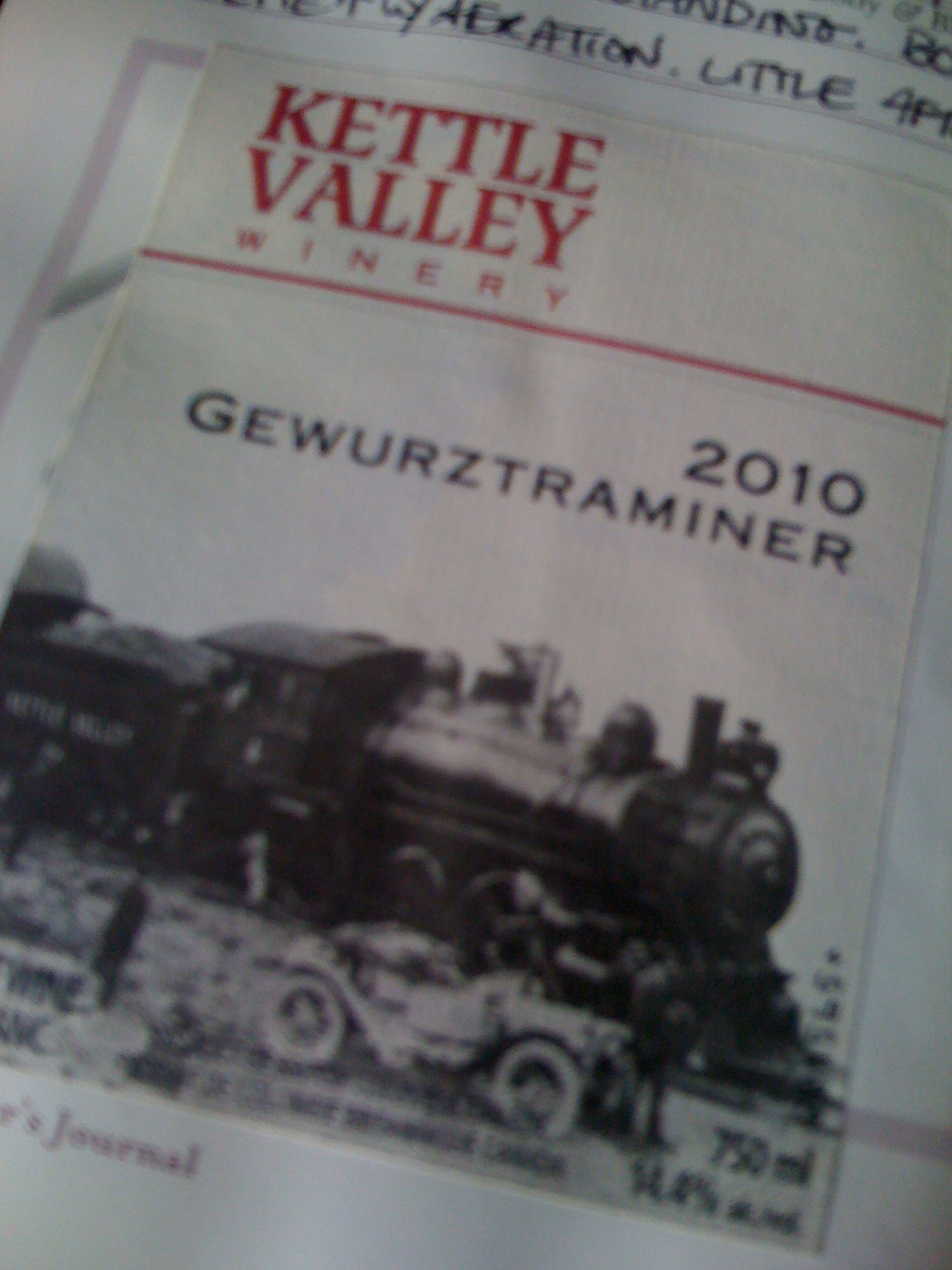
Photo Copyright Valerie Stride 2012


While this light golden-coloured wine from the Okanagan Valley had a nice fruity bouquet, it consistently holds lychee and white peach notes on the palate as well. The photographic label told me this product from the valley was 14.4%, and to say the least, it held its alcohol quite nicely. The finish was quick and dirty – but if you like that sort of thing (and you’re not into extreme-style wines such as Alsatian Gewürztraminers), then this just might be the Gewürztraminer for you. There won’t be any competition from me.

All jokes aside, Kettle Valley Winery’s 2010 Gewürztraminer is a refreshing light+ bodied wine that will please your guests while supporting BC’s own wine industry. It would pair very well with tangerine and almond insalata verde, or with lemon-buttered white fish.

Find this quality wine product at your local Liberty Wines or at Kitsilano Wine Cellar, to name a few. See my Resources page for website and contact info.

Click here to find out more about Kettle Valley Winery:
http://www.kettlevalleywinery.com/scms.asp
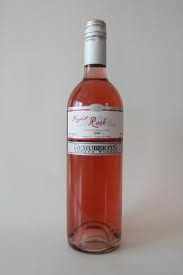
Fact: This is one juicy Rosé.
Opinion: If you don’t go out and try this Rosé, you will seriously regret it. (Hey! It’s my opinion!)

I couldn’t have said it better myself. Oh wait…

At 11.1% abv, this light-bodied bottle of light pink gorgeousness is one that will please. From the Okanagan Valley, BC, it is bursting, and I mean b u r s t i n g, with luscious strawberry, cranberry, and a sprinkle of white pepper on the bouquet. The palate aims to please with its just as succulent raspberry, sweet preserved cherry, and a darker pepper infusion. There is a medium length finish from the splendour in this bottle, and it provides the slightest bit of tartness.

So where did it get its beauty? Pinot Meunier and Gamay grapes. Yup. I said it.

Pinot “Dusty Miller” Meunier, is a varietal that is used widely to make the ever-popular Champagne (typically made from Pinot Noir and Chardonnay). The Pinot Meunier varietal is not as fussy as Pinot Noir, and so winemakers prefer it to its counterpart. The word “Meunier”, when translated, means “miller”. This term was given to this varietal because of the dusty flour-like coating on the underside of the vine leaves. How cool is that?!

Gamay, on the other hand, is another French varietal, which is used to make Beaujolais. It is said to have first been seen in the village of Gamay in the 1300s. Hard to believe that it might have been around that long! The Gamay grape is also less sensitive than Pinot Noir, and is said to be easier to cultivate. Gamay provides characteristics of, “vibrant youthful fruit expressions reminiscent of bright crushed strawberries and raspberries” which is probably where those distinctly attractive fruit flavors came from.

…Just go buy it already.

Cheers!

A Review in a Review:
“This was, indeed, the Rosé that made me enjoy Rosés.” – Valerie Stride, Wine Lover

Contact your local Private BC Wine Store for availability.

O solo mio…

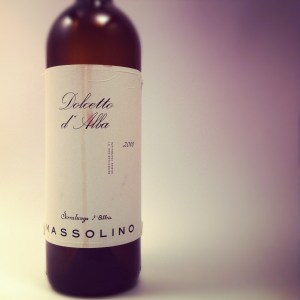
How I disappeared into this wine! Breath taken, I completely forgot that my partner was sitting across the table from me, and that I had cooked him this lovely birthday dinner. Moreover, the ricotta and spinach manicotti and insalate verde could wait in line for the Massolino to take its turn! Alright, truth be told – I did not ignore him for long. What is a wine lover to do? We were both engulfed by the Dolcetto, and, of course, the meal too.

Purchased for $24.99 at the Specialty BCLDB at Alberni and Bute in downtown Vancouver, I was pleased to discover this wine. Tim Ellison, Sommelier and Director of Food and Beverage Services at the Pacific Institute of Culinary Arts, recommended this Italian beauty for this especially lovely occasion. I was amused with this vino’s depth and backbone, and quite literally, spent a respectable amount of time sipping and discovering it.

Photo Copyright Valerie Stride 2012

Dolcetto d’Alba by Massolino

Oh, the discovery…

Oh, the beauty…

Oh, the… Fine. I’ll get on with it.

Fact: Piedmont is famous for its reds. In the northern parts of Italy, one can find Dolcetto grapes (in addition to Barbera and Nebbiolo) being made into wine. Coming from the sub-region of Alba, this Massolino product shone with the most beautiful garnet colour. Because of the pigmentation in the skins of the Dolcetto varietal, it does not take long for the wine to develop a very deep colour during masceration. In most cases, lighter-bodied varietals will not be as dark as the Dolcetto due to that difference in pigmentation. First sniffs revealed a fruity, yeasty, and animalistic bouquet. A closer look exposed hints of black cherry alongside a horse and barnyard aroma, and it led me to visualize what this small place in Italy is all about. (I always take the opportunity to close my eyes and try and put myself wherever the wine was made. Winemakers want the consumer to experience where the soil was tilled, the vines planted, and the grapes grown and harvested. The beauty of winemaking lies in the attempt by the winemaker to capture this combination of things.) Dolcetto tends to be on the dry, light to medium-body side of the scale, and this product stood true to that fact. Specifically, this Dolcetto d’Alba was well-balanced, and the oaky edges and soft tannic structure were quite charming. The woodiness was merely hinted at, and its liveliness was in the leathery red berries that burst onto the palate with every beautiful sip. The attractiveness of this product was also in its terroir-driven character. My conclusion: the food was cold, and salad limp, and my partner and I were very happy.

As a side note to non-wine-related goodness, Alba is also known for a very famous chocolate product. You guessed it! Ferrero!

Cheers!

Find a BC Liquor Store that carries this Dolcetto d’Alba near you:
http://www.bcliquorstores.com/product/189274

Close your eyes. Okay, just wait to close your eyes until you are done reading this. Or else you won’t be able to read, and then we are both out of luck here.

Imagine walking along a country road. It’s a sunny summer day; barely any clouds in the sky. The temperature is hovering around 24°, and as you walk across the gravelly ground, small clouds of dust are kicked up from under your heels. Suddenly, just to the side, are berry bushes. You notice that there are copious amounts of perfectly ripened fruit bits everywhere, glowing red in the sun. You cannot help but drink them. Wait, [long pause] what?

Now that I have your imagination…

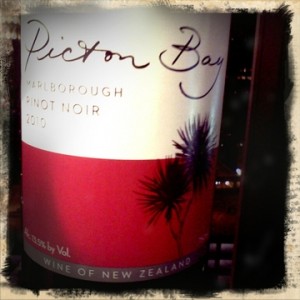
Picton Bay’s Pinot Noir grabbed my senses and wrenched them a bit. I am not going to lie. I found it to be an enchanting wine on the level of everyday. It is a great summer sipper that is lusciously juicy, fruity, and charming, I might add, for an affordable price. I was so impressed with its colour, that I actually could not find the right descriptor. So, since colour descriptors are already in place for the wine tasting system, I will go with clear light ruby. I promise you it was a clear and light ruby that you would want on your finger as a ring. The bouquet on this Pinot Noir exaggerated fresh red berries – cherries, strawberries, and raspberries – in all of their glory with a side of lightly smoked wood. The palate begged to be noticed with smooth, easy-going tannins and that black peppery nuance one comes to expect from a Pinot Noir, but the red berries took the shortcake and tasted so ripe, that it was as if the fruit would have bled if I had of touched it with my meandering hands on a summer day.

Oh, no, it was not, I repeat not, lip-smackingly tasty at all.

I could simply stick my nose in a bucket of fresh hand-picked, bush ripened fruit, but something tells me it just wouldn’t be the same. This definitely is not a Pinot Noir to be aged; it is a drink now and seize-the-day kind of Pinot Noir. Don’t take my word for it. You have one of two choices: you can close your eyes now and imagine what I have told you, or you can drive down to Bellingham, WA and pick up a bottle at the local T.J.’s. Unfortunately, it appears that BC retailers haven’t picked-up on this bottle of simple beauty yet. So sad!

Cheers!

Photo can be found at http://www.cheapwinefinder.com/2011/05/2010-picton-bay-pinor-noir/

Photo courtesy of http://www.cheapwinefinder.com/2011/05/2010-picton-bay-pinor-noir/

Before we enter the world of this Sauvignon Blanc Reserva, let us begin with some background knowledge. It is good for you, you know!

Santa Carolina is one of the seven largest wineries in all of Chile. It was established in 1875, although Chile has been making wine for ages. When I say ages, I mean ages. Let’s go with a rounded number: 450 years. Exactly. Just a little while. As it sits, Santa Carolina is one of the top five Chilean wine brands to be purchased in the United States. What about Canada? I have no idea. This is the statistic I found. To me, that data screams two things: a) Santa Carolina produces a lot of wine, and b) people like it.

So, I tried the 2011 Sauvignon Blanc Reserva. I would like to stop at, “It was a delicious encounter for my tastebuds,” but I think it deserves a bit more exploration than that. As most wines that come out of Chile are dry, this one was not an exception. It had a distinct yellow-green hue, and was as clear as wines come. My nose immediately sensed gooseberries, Anjou-like pear essences, and tart green apple. In other words, it smelled very green! Deliciously crisp, this light-bodied Sauvignon Blanc revealed itself to be a great summer sipper. The palate produced crisp apple and pear flavour profiles with a hint of bitterness, but overall well-balanced acidity. At 13.5% alcohol, it did come across a bit hot for me, but generally speaking, I was delightfully pleased with this wine. I guess this means that a) I will be buying it again and b) I also fall under the “people like it” category.

Cheers!

This wine is available at your local BC Liqour Store:
http://www.bcliquorstores.com/product/741272

To learn more about Santa Carolina wines, please visit:
http://www.santacarolina.cl/eng/index.php